Neuro-Ophthalmology: How Brain and Nerve Problems Affect Vision
Key Takeaways
- Vision depends on a chain that runs from the eye through the optic nerve to the brain. A fault anywhere along it can change what you see, even when the eye itself looks healthy.
- Warning signs include painful vision loss, double vision, loss of side vision, brief blackouts of vision and changes in colour vision.
- Sudden double vision, a drooping eyelid with a changed pupil, or vision loss with severe headache, weakness or trouble speaking is an emergency.
- Neuro-ophthalmology looks for the cause using eye tests, imaging when needed, and coordinated care with neurologists.
When vision changes, most people assume the problem lies in the eye: a glasses number, a cataract or dry eyes. Sometimes the eye is fine, and the cause sits further back, in the optic nerve, the brain or the nerves that move the eyes. These problems can look like ordinary eye trouble at first, which is why they are often missed or delayed.
This guide explains how the brain and nerves shape what you see, the common conditions involved, the warning signs, how doctors find the cause, and when to seek urgent care. It is general education and cannot diagnose your symptoms.
How Do the Eyes, Nerves and Brain Work Together to Create Vision?
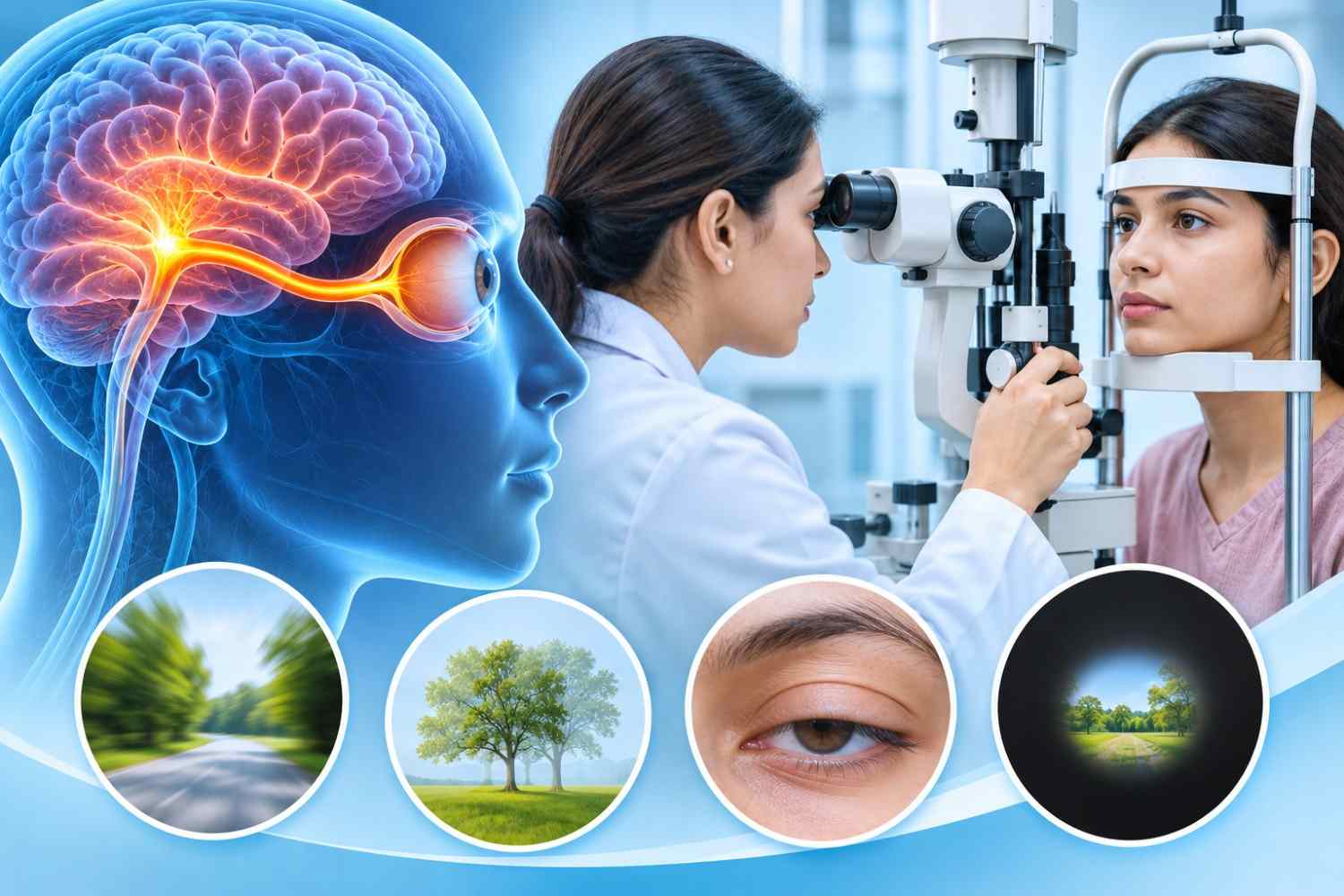
Light enters the eye and is detected by the retina. The signal then travels along the optic nerve, through pathways deep in the brain, to the visual areas at the back of the brain, which turn it into the picture you see. Separate cranial nerves control eye movements, the size of the pupils and the lifting of the eyelids, and they keep both eyes lined up so the two images fuse into one.
Damage, inflammation, pressure or reduced blood flow at any point can disturb vision, eye movements, the visual field or the way the brain processes what the eyes send. Neuro-ophthalmology is the area of eye care that deals with this relationship. An evaluation is useful when vision problems cannot be fully explained by the eye alone, or when visual symptoms come with neurological conditions.
Which Symptoms Suggest a Brain or Nerve Cause?
No symptom proves a neurological cause, but the patterns below deserve a prompt eye examination.
| What You Notice | What It May Point To | How Soon to Act |
|---|---|---|
| Vision loss in one eye with pain on eye movement, and dull colours | Inflammation of the optic nerve (optic neuritis). | Same-day eye assessment. |
| Double vision that goes away when one eye is covered | Eyes not lined up: nerve, muscle or brain cause. | Urgent, especially if sudden. |
| Double vision that stays when one eye is covered | Usually a problem within that eye, such as the cornea or lens. | Prompt eye examination. |
| Brief blackouts of vision lasting seconds, with headache | Raised pressure inside the head affecting the optic nerve. | Same-day assessment. |
| Loss of side or central vision | Retina, optic nerve or visual pathway problem. | Prompt examination with visual field testing. |
| Drooping eyelid with double vision or a changed pupil | Possible nerve problem. | Emergency care. |
Many of these symptoms also have simple eye causes, so the aim of the first examination is to sort out which is which.
What Are the Common Neuro-Ophthalmic Conditions?
Optic Neuritis
Optic neuritis is inflammation of the optic nerve. It usually affects one eye and causes pain that worsens with eye movement, loss of vision and duller colours.
Mayo Clinic notes that most people with a single episode recover vision, and that steroid medicines may speed recovery (Mayo Clinic). The North American Neuro-Ophthalmology Society adds that treatment is most likely to be recommended when vision is severely affected or when symptoms or tests are unusual (NANOS).
Optic neuritis can be linked to multiple sclerosis and other autoimmune conditions, but not everyone who has it develops them.
Papilledema and Raised Pressure in the Head
Papilledema is swelling of the optic disc caused by increased pressure inside the skull. It can come with headache, nausea and vomiting, brief blackouts of vision lasting seconds, and sometimes double vision (PMC review).
It needs careful evaluation because the raised pressure can have serious causes, and vision loss from papilledema may be irreversible if the cause is not found and treated.
Double Vision and Cranial Nerve Palsies
Double vision can come from problems with eye alignment, the nerves that move the eyes, the eye muscles or neurological pathways. The first question is whether it is monocular (present with one eye) or binocular (present only with both eyes open), because the causes and urgency differ.
Cranial nerve palsies weaken eye movement and sometimes cause double vision. Diabetes and high blood pressure are among the conditions that can affect these nerves, so people with diabetes should also have regular retinal and diabetic eye care.
Visual Field Loss
Loss of peripheral or central vision can come from the retina, the optic nerve or the visual pathways. Glaucoma is a common eye cause, so a glaucoma evaluation is often part of the work-up.
Lesions or tumours affecting the optic nerves or visual pathways can also cause visual field abnormalities or progressive visual symptoms, and may need coordinated ophthalmic and neurological evaluation.
Headaches with Visual Symptoms
Some people with headaches have visual symptoms, and an evaluation helps decide whether the visual complaint comes from an eye problem or a neurological one.
Seek Emergency Care Now
If you have sudden double vision, sudden vision loss, a drooping eyelid with a changed pupil, or vision changes together with severe headache, weakness, a drooping face, confusion or trouble speaking, these can signal a stroke or another neurological emergency.
Go to the nearest hospital emergency department without waiting for a routine appointment.
How Are Neuro-Ophthalmic Problems Diagnosed?
Diagnosis starts with a detailed history and an eye examination, then adds tests chosen for your symptoms. Not everyone needs every test.
| Test | What It Shows |
|---|---|
| Visual acuity and colour vision | How clearly you see, and whether colours look faded, which can point to optic nerve disease. |
| Pupil responses | Whether signals from each eye reach the brain normally. |
| Eye movements and alignment | Whether the nerves and muscles that move the eyes work together. |
| Visual field testing (perimetry) | Gaps or loss in central and side vision. |
| Fundus examination | The appearance of the optic disc, retina and blood vessels, including swelling of the disc. |
| OCT | Detailed imaging of the retinal nerve fibre layer and optic nerve-related structures. |
| MRI, CT or other neuro-imaging | Causes in the brain or optic pathways, or raised pressure inside the head, when these are suspected. |
What Treatments Are Used?
Treatment depends on the cause, so the first goal is to find it. Some examples:
- Optic neuritis: Some typical cases improve without treatment, while steroid medicines may be advised to speed recovery in selected cases.
- Papilledema: Treatment is directed at the cause of the raised pressure, with neurological care as needed, because vision can be permanently damaged if it is not controlled.
- Double vision and nerve palsies: Treatment targets the underlying condition, such as diabetes or high blood pressure, and the double vision may be eased while the nerve recovers.
- Lesions or tumours on the visual pathways: Care is coordinated between ophthalmologists and neurologists.
Neuro-ophthalmology often works alongside neurology, and your eye doctor will explain when you need an MRI, a neurologist or another specialist.
What Should You Expect at a Neuro-Ophthalmic Evaluation?
The evaluation looks at optic nerve function, visual acuity, colour vision, pupil responses, eye movements, visual fields, eye alignment, and the retina and optic disc.
To make the most of your visit, bring any MRI or CT reports, a list of medicines, and a short note of when each symptom started and whether it comes and goes. Bring a companion if you expect to have dilating drops, which can blur vision for a few hours.
Neuro-Ophthalmology in Vadodara: When to See an Eye Doctor
Go to the emergency department for sudden double vision, sudden vision loss, or visual symptoms with severe headache, weakness or trouble speaking.
Book an eye examination if you have unexplained or gradual vision loss, loss of side vision, changes in colour vision, double vision that comes and goes, a drooping eyelid (see oculoplasty and eyelid care), or vision changes that follow a neurological illness or injury.
Sattva Eye Hospital's neuro-ophthalmology page lists unexplained vision loss, optic neuritis, papilledema, double vision, visual field defects, cranial nerve palsies and headache-related visual problems among the conditions it evaluates.
It also lists OCT, visual field testing, fundus examination, optic nerve imaging and neuro-imaging such as MRI or CT among tests that may be recommended when clinically required. For a general check, see its comprehensive eye examination service.
Worried About a Change in Your Vision?
Book an evaluation at Sattva Eye Hospital, Nizampura, Vadodara, through the appointment page or call +91 75760 82474.
For sudden symptoms, go to the nearest emergency department instead of waiting for a routine appointment.
Frequently Asked Questions
What Is Neuro-Ophthalmology?
Neuro-ophthalmology focuses on eye and vision problems related to the optic nerve, brain, visual pathways, eye movements and neurological conditions.
Can Neurological Problems Cause Vision Loss?
Yes. Problems affecting the optic nerve, brain or visual pathways can cause vision loss or visual field abnormalities, even when the eye itself looks healthy.
What Is Optic Neuritis?
Optic neuritis is inflammation of the optic nerve. It usually affects one eye and may cause vision loss, duller colours and pain with eye movement.
Does Optic Neuritis Always Mean Multiple Sclerosis?
No. Optic neuritis can be linked to multiple sclerosis and other autoimmune conditions, but not everyone who has it develops them. Your doctor will advise on tests.
What Is Papilledema?
Papilledema is swelling of the optic disc caused by increased pressure inside the skull. It can be associated with serious conditions and needs prompt evaluation.
Why Do I See Double?
Double vision can come from the eye itself, or from eye alignment, the nerves that move the eyes, the eye muscles or neurological pathways. Checking whether it clears when one eye is covered helps the doctor narrow the cause.
Is Sudden Double Vision an Emergency?
Yes, it needs urgent assessment, and especially so with severe headache, weakness, a drooping face, a changed pupil or trouble speaking. Go to a hospital emergency department.
Can a Brain Problem Cause Loss of Side Vision?
Yes. Lesions or tumours affecting the optic nerves or visual pathways can cause visual field abnormalities, though loss of side vision also has eye causes such as glaucoma.
What Tests Are Used in a Neuro-Ophthalmic Evaluation?
Visual acuity, colour vision, pupil examination, eye movements, visual fields, fundus examination and OCT, with MRI or CT when a neurological cause is suspected.
How Do I Book a Neuro-Ophthalmology Evaluation at Sattva Eye Hospital?
Use the online appointment page or call +91 75760 82474. The team will help schedule a consultation at a convenient time.
Conclusion
When vision changes without a clear eye cause, the optic nerve, the brain and the nerves that move the eyes deserve attention. Painful vision loss, double vision, loss of side vision, brief blackouts of vision and colour changes are reasons to be examined promptly, and sudden symptoms with headache, weakness or trouble speaking are an emergency.
If you are in Vadodara and have unexplained visual symptoms, you can learn more about neuro-ophthalmology at Sattva Eye Hospital or book an evaluation.