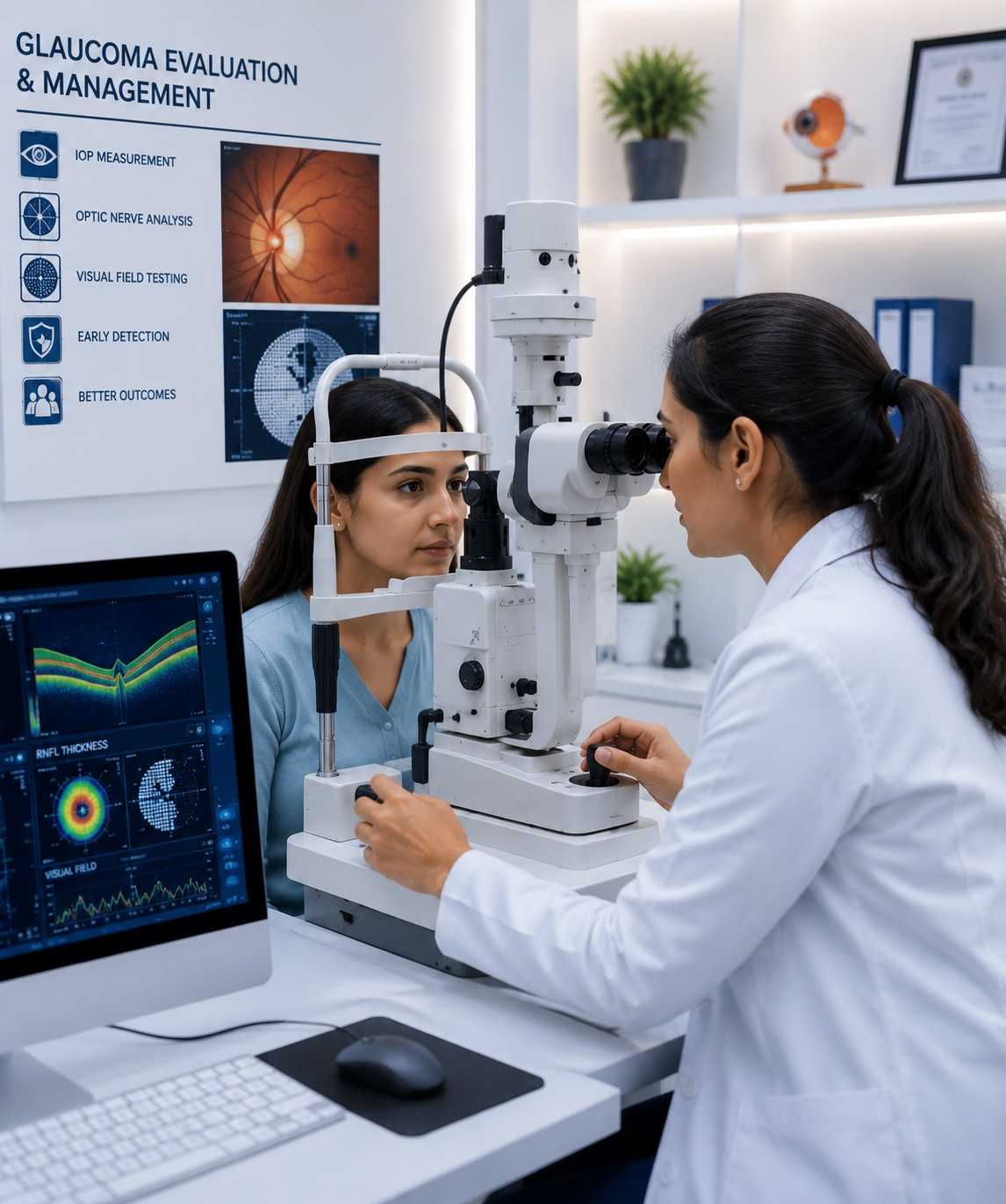
Glaucoma Evaluation & Treatment in Vadodara

Glaucoma Evaluation and Treatment at Sattva Eye Hospital Vadodara
Glaucoma Treatment in Vadodara

Comprehensive Glaucoma Evaluation & Care at Sattva Eye Hospital

Glaucoma has earned a reputation as the "silent thief of sight", and for good reason — it can develop gradually, without any noticeable symptoms, while quietly damaging the optic nerve. By the time changes in vision become obvious, meaningful and often irreversible damage may have already occurred.

At Sattva Eye Hospital in Vadodara, our glaucoma evaluation is built to catch this earlier: identifying risk factors, assessing the optic nerve and visual function, and determining exactly what monitoring or treatment is right for your eyes, so vision loss can be slowed or prevented rather than discovered too late.

Our Glaucoma Care Focuses On:
Glaucoma Risk Factor Assessment
Intraocular Pressure Assessment
Optic Nerve Evaluation
Drainage Angle Assessment
Visual Function Assessment
Personalized Glaucoma Management

About the Service: Glaucoma is a group of eye conditions that damage the optic nerve, most often linked to elevated pressure inside the eye, and it can lead to progressive vision loss if left unaddressed.

Our glaucoma evaluation and management service is for anyone at risk — including people with a family history of the condition, adults over 40, those with diabetes or elevated eye pressure, and patients already diagnosed with glaucoma who require ongoing care.

Diagnosis at Sattva Eye Hospital goes beyond a single pressure reading. We assess the optic nerve, the eye's drainage angle, and visual function together, so treatment decisions are based on a complete clinical picture rather than one number.

Book a Glaucoma Evaluation in Vadodara — Protect your vision with early detection and a treatment plan built around you.
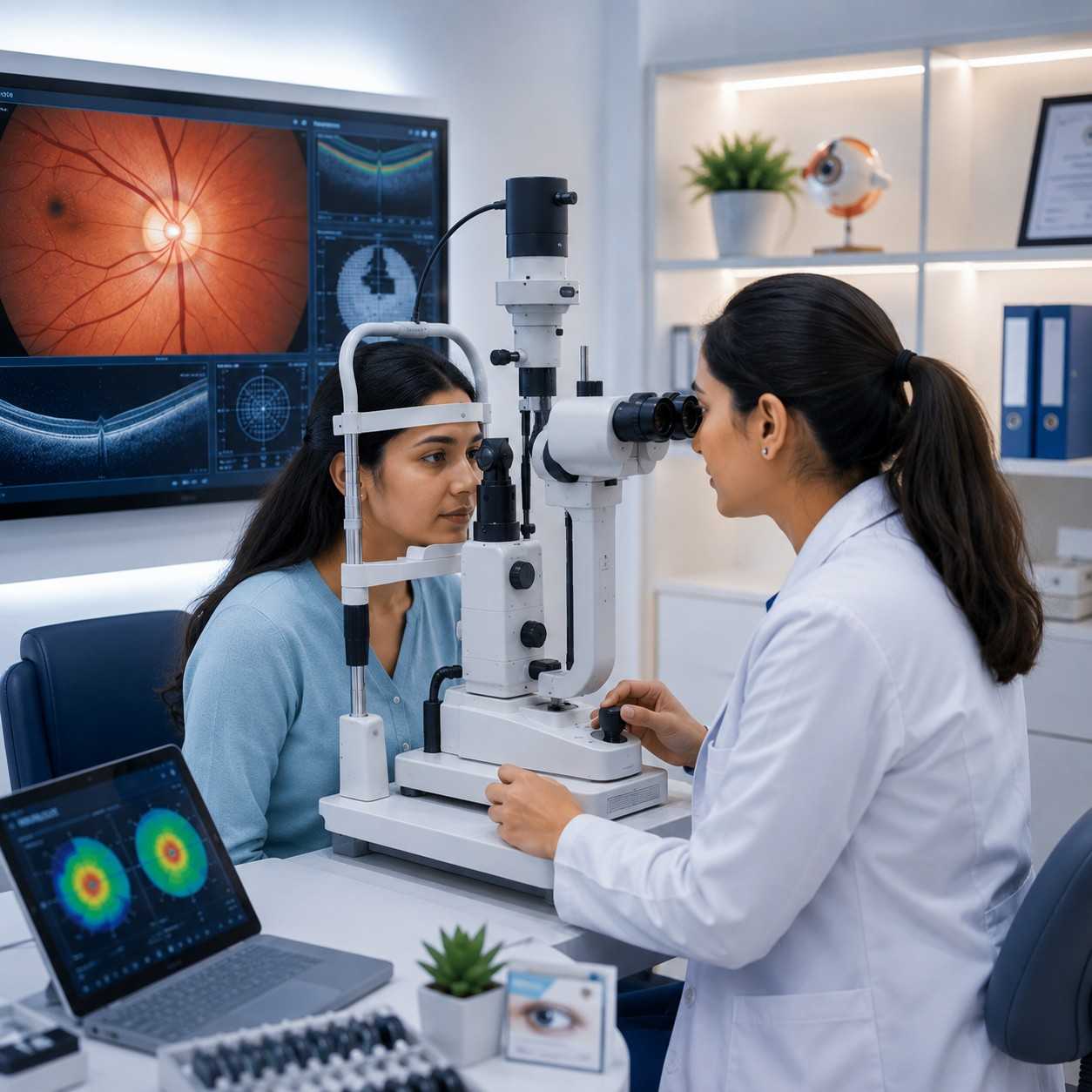
What's Included in Our Glaucoma Care

Comprehensive Glaucoma Evaluation & Management

Our glaucoma care goes beyond checking eye pressure. We assess the optic nerve, drainage angle, visual function, and other relevant structures to build a complete clinical picture.

Depending on your examination findings and individual risk factors, additional investigations such as retinal imaging or OCT assessment may be recommended.

Treatment and follow-up are tailored to your condition, ranging from medical management and laser treatment to surgical options when clinically required.

Intraocular Pressure (IOP) Assessment
Gonioscopy
Visual Field Testing
Optic Nerve Evaluation
Retinal & OCT Assessment, When Clinically Indicated
Personalized Medical Management
Laser Treatment Options for Selected Patients
Surgical Management, When Required
Ongoing Monitoring & Follow-Up Care
Glaucoma Treatment

Treatment Options We Offer

Glaucoma treatment is tailored to the type and stage of the condition, your eye pressure, optic nerve health, and overall clinical needs. Our goal is to control disease progression and protect your remaining vision.

Medical Management

Prescription eye drops or other medications may be used to lower intraocular pressure and help control glaucoma based on your individual condition.

Laser Treatment

Selected patients may benefit from laser-based procedures depending on the type, severity, and clinical characteristics of their glaucoma.

Surgical Management

When required, surgical treatment may be considered to improve eye pressure control and help protect the optic nerve from further damage.

Regular Monitoring

Ongoing examinations and diagnostic testing help assess disease stability, monitor treatment response, and identify changes that may require adjustment of care.

WHY CHOOSE SATTVA EYE HOSPITAL?

Why Choose Sattva Eye Hospital for Glaucoma Treatment in Vadodara?

Specialist-Led Diagnosis

Every evaluation is guided by Dr. Ankit Ahir, MBBS, DOMS, DNB (Ophthalmology), ensuring glaucoma findings are interpreted with genuine clinical expertise.

Multi-Test Diagnostic Approach

IOP assessment, gonioscopy, visual field testing, and optic nerve evaluation are used together, rather than relying on a single test.

Advanced Imaging When Needed

Retinal and OCT assessment can provide detailed structural information to support glaucoma diagnosis and long-term monitoring.

Glaucoma Treatment at Sattva Eye Hospital Vadodara

Full Spectrum of Treatment Options

From medical management and laser treatment to surgical management, care is matched to your specific type and stage of glaucoma.

Individualized Long-Term Monitoring

Follow-up schedules are based on disease stability and treatment response, rather than a fixed interval for every patient.

Clear Communication

We explain what your results mean, what treatment involves, and why a particular approach is recommended for your individual needs.

Conveniently Located in Vadodara

Based in Nizampura, Sattva Eye Hospital is easily accessible for patients across Vadodara.

Benefits of Choosing Our Glaucoma Care

Glaucoma Care Focused on Long-Term Vision Protection

Our glaucoma care focuses on identifying risk factors and early disease changes, including changes that may occur before noticeable vision problems develop.

We use a comprehensive, multi-test approach to understand your eye pressure, optic nerve, visual function, and other relevant clinical findings before recommending treatment.

Your treatment and follow-up plan is tailored to your specific type and stage of glaucoma, with clear explanations and ongoing monitoring to help protect your vision over time.

Early Identification of Glaucoma Risk
Multi-Test Diagnostic Assessment
Treatment Matched to Your Glaucoma Type & Stage
Diagnosis, Medical, Laser & Surgical Care Under One Roof
Ongoing Monitoring for Early Detection of Progression
Clear Explanations & Patient Engagement
GLAUCOMA EVALUATION & TREATMENT PROCESS

Our Glaucoma Evaluation & Treatment Process

Our glaucoma care follows a structured evaluation process to assess eye pressure, the drainage angle, visual function, and optic nerve health before developing an individualized treatment and follow-up plan.

Step 1 — Intraocular Pressure (IOP) Assessment

Eye pressure is measured to assess one of the key risk factors associated with glaucoma and help determine whether further evaluation is required.

Step 2 — Gonioscopy

We examine the drainage angle of the eye, helping distinguish between different types of glaucoma and providing important information for treatment planning.

Step 3 — Visual Field Testing

Central and peripheral vision are evaluated to identify functional changes that may be associated with glaucoma and to monitor visual function over time.

Step 4 — Optic Nerve Evaluation

The optic nerve is carefully examined for structural changes that may indicate glaucomatous damage and help guide diagnosis and monitoring.

Step 5 — Retinal & OCT Assessment

When indicated, retinal and optic nerve imaging provides detailed structural information to support glaucoma diagnosis and ongoing monitoring.

Step 6 — Personalized Treatment & Follow-Up

Based on your findings, we recommend medical, laser, or surgical management along with a monitoring schedule suited to your individual condition and treatment needs.

Frequently Asked Questions

Find answers to common questions about glaucoma, early detection, eye pressure, glaucoma tests, treatment, monitoring and glaucoma care at Sattva Eye Hospital, Vadodara.

Glaucoma is a group of eye conditions that can damage the optic nerve and cause progressive vision loss.

Yes. A comprehensive eye examination and appropriate glaucoma tests can help identify early structural or functional changes, often before noticeable symptoms appear.

No. Elevated eye pressure is an important risk factor, but not everyone with high pressure develops glaucoma. Conversely, glaucoma can sometimes occur even when eye pressure is within a statistically normal range.

Depending on the patient, glaucoma evaluation may include intraocular pressure (IOP) measurement, gonioscopy, visual field testing, optic nerve examination, OCT, and retinal assessment.

Untreated or poorly controlled glaucoma can cause severe and permanent vision loss. Early detection and appropriate management can help reduce the risk of disease progression and protect remaining vision.

Currently, glaucoma-related optic nerve damage cannot generally be reversed. Treatment focuses on controlling risk factors such as eye pressure and monitoring the disease to help protect remaining vision.

Yes. Glaucoma commonly requires long-term monitoring to assess eye pressure, optic nerve health, visual fields, and response to treatment. The frequency of follow-up depends on the individual's condition and risk factors.

Yes. Childhood or congenital glaucoma is uncommon but can occur and requires specialized evaluation and management.