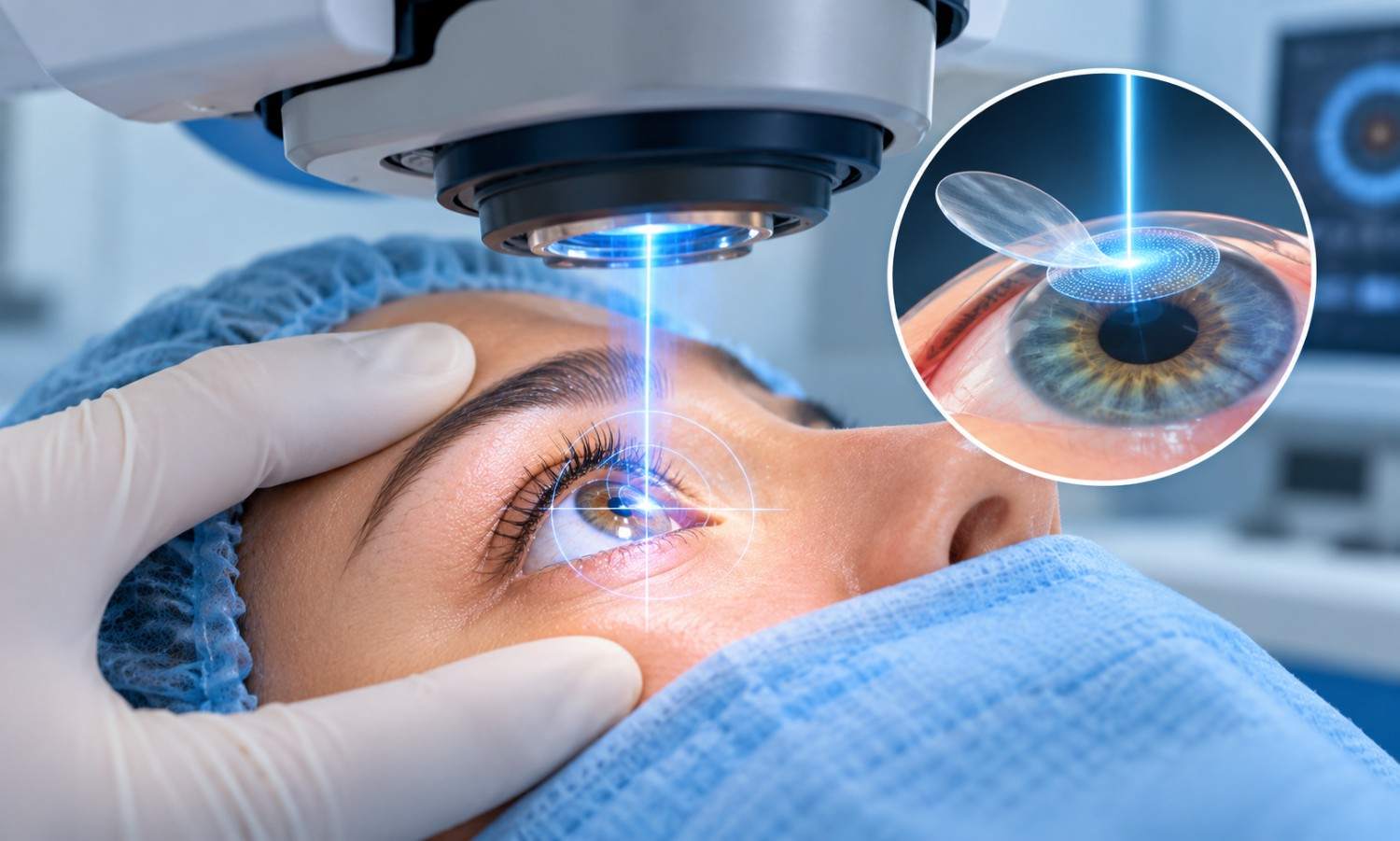
LASIK Eye Surgery in Vadodara: Eligibility, Procedure, Recovery & Results
If you have worn glasses or
contact lenses for years, LASIK is probably one of the first alternatives you
have heard about. It is also one of the most misunderstood: some people assume
everyone qualifies, others assume it is risky for everyone. The truth sits in
between. LASIK works well for carefully selected patients, and the selection
process is the most important part of it. This guide explains who is generally
eligible, how the procedure works step by step, what recovery usually looks
like, what results are realistic, and what to ask before you decide, with
specific points for patients in Vadodara.
Quick answer: LASIK is a laser procedure that reshapes the cornea to correct
nearsightedness, farsightedness and astigmatism. Suitable candidates are
generally adults with a stable prescription, healthy corneas and no significant
eye disease. Vision often improves within a day and settles over weeks. Results
are good for most suitable patients but are not guaranteed, and a detailed
evaluation decides eligibility.
What Is LASIK?
LASIK stands for Laser-Assisted
In Situ Keratomileusis. The cornea, the clear front surface of the eye, does
much of the eye's focusing. In nearsightedness (myopia), farsightedness
(hyperopia) and astigmatism, the focusing is slightly off, which is why glasses
or contact lenses are needed. LASIK uses a laser to reshape the cornea so that
light focuses more accurately on the retina, reducing or removing the need for
glasses in suitable patients.
It corrects the eye's focusing,
not eye disease. LASIK does not prevent or treat cataract, glaucoma or retinal
conditions, and it does not stop the age-related change in near vision that
affects everyone in their forties and beyond.
Who Is Eligible for LASIK?
Eligibility is decided by your
own eyes, not by a general rule. These are the factors surgeons typically look
at:
- Age: usually 18 or older, because the prescription
often keeps changing through the late teens and early twenties.
- A stable prescription: generally unchanged over the
past year, though your surgeon sets the exact standard.
- A treatable refractive error: myopia, hyperopia or
astigmatism within the range the laser can safely correct, which depends on
your cornea.
- A healthy cornea: adequate thickness and a regular
shape, confirmed by mapping.
- Healthy eyes overall: no active infection or
inflammation, and no conditions such as uncontrolled glaucoma or a significant
cataract that need attention first.
- A healthy tear film: dry eye and other surface problems
should be assessed and managed beforehand.
- General health: certain conditions, such as poorly
controlled diabetes or autoimmune disease, and some medications need careful
review. Pregnancy and breastfeeding can shift the prescription, so surgeons
usually advise waiting.
- Realistic expectations: understanding what LASIK can
and cannot do.
You may be advised against
LASIK, or steered toward another option, if you have an irregular or thin
cornea (including suspected keratoconus), an unstable prescription, significant
dry eye, certain retinal or optic nerve conditions, or a prescription beyond
what the laser can safely treat. Being told you are not a candidate is a safety
decision, not a failure, and other options may exist.
What Tests Are Done Before LASIK?
A LASIK evaluation is more
detailed than a routine eye test. Sattva Eye Hospital's evaluation page lists
these components:
- Vision and refraction assessment to measure your
current prescription.
- Corneal evaluation of shape, regularity and thickness.
- Corneal topography, a detailed map of the corneal
surface that can reveal irregularities relevant to surgery.
- A comprehensive eye health examination to identify
conditions that need treatment first.
- Ocular surface and dry eye assessment.
- A review of medical and eye history, previous surgeries
and medications.
If you wear contact lenses, you
will usually be asked to stop wearing them for a period before measurements,
because lenses can temporarily change the shape of the cornea. Your clinic will
tell you how long. Additional tests may be recommended depending on what your
eyes show.
How the LASIK Procedure Works, Step by Step
Techniques and equipment vary
between clinics, but the sequence is broadly the same. You are awake
throughout, and the procedure is usually brief:
1. Preparation: numbing drops are placed in the eye,
and a small holder keeps the eyelids open. You will not feel pain, though you
may notice pressure.
2. Creating the corneal flap: a thin hinged flap is
made on the surface of the cornea, using either a femtosecond laser or a
precision blade, depending on the clinic's technology.
3. Lifting the flap: the flap is gently folded back to
expose the tissue underneath.
4. Reshaping the cornea: an excimer laser removes a
very small, precisely calculated amount of tissue according to your
measurements. You look at a fixed light while the laser works, and the laser
itself acts for a short time.
5. Repositioning the flap: the flap is laid back in
place and bonds naturally, usually without stitches.
6. Protection and rest: you rest briefly, may be given
protective eye shields, and are generally able to go home the same day. Arrange
for someone to accompany you.
LASIK Recovery: What to Expect
The First 24 Hours
Your eyes may feel scratchy,
watery or sensitive to light, and vision may be hazy. Rest, and sleeping for a
few hours often helps the early discomfort settle. You will be prescribed eye
drops, typically a mix of anti-infective, anti-inflammatory and lubricating
drops, and told how to use them. A check the next day is standard.
The First Week
Vision usually improves quickly,
though it can fluctuate through the day. Glare, halos and dryness are common
early on. Do not rub your eyes. You will generally be advised to avoid
swimming, dusty or smoky places, and eye makeup for a period set by your surgeon.
Use lubricating drops as directed, especially during screen use. Do not drive
until you are cleared to.
The First Month and Beyond
Vision continues to stabilise
over several weeks. Dry eye can persist for weeks or sometimes months, and
usually improves with lubricating drops. Contact sports and activities with a
risk of eye impact need extra caution for longer. Keep every scheduled follow-up,
even if you feel fine, because that is how problems are caught early.
LASIK Results: What Is Realistic?
Many suitable patients reach
vision good enough for most daily activities without glasses. That does not
mean every patient achieves perfect vision, and it does not mean glasses are
gone forever. Some people still use glasses for particular tasks such as night
driving or fine reading, and a small residual prescription is possible.
The most important thing to
understand is presbyopia, the natural loss of near focusing that begins around
the mid-forties. LASIK does not prevent it, so patients in their forties and
older may still need reading glasses, and the plan for near vision should be
discussed before surgery. Sattva Eye Hospital's own LASIK page makes the same
point: LASIK can reduce dependence on glasses or contact lenses in
appropriately selected patients, but it does not guarantee complete freedom
from glasses in every situation.
If your prescription drifts back
slightly over time, an enhancement procedure may sometimes be possible,
depending on whether enough healthy corneal tissue remains. Your surgeon
decides this case by case. It also helps to know that LASIK does not make your
eyes immune to future eye conditions. Regular eye examinations remain important
afterwards, particularly if you have diabetes or a family history of glaucoma,
and a cataract developing decades later is treated in the usual way.
Risks and Side Effects
LASIK is widely performed and
generally considered safe in well-selected patients, but it is surgery, and the
risks should be understood before you consent:
- Dry eye: the most common side effect, usually temporary
but occasionally lasting.
- Glare, halos or starbursts around lights, particularly
at night, which often improve with time.
- Under-correction, over-correction or regression, which
may need an enhancement or glasses.
- Flap-related complications, which are uncommon.
- Infection or inflammation, which are rare and are why
drops and follow-up matter.
- Corneal ectasia, a rare weakening and bulging of the
cornea, which is the main reason corneal mapping and thickness measurements are
done beforehand.
A good clinic discusses these
openly rather than minimising them. If risks are only described as negligible,
ask more questions. You are also entitled to time. For an elective procedure
there is no reason to decide on the day of your evaluation, and a second
opinion is a normal part of the process.
LASIK and Other Vision Correction Options
If your evaluation shows LASIK
is not ideal, there may be alternatives. This is general information, and
availability depends on the provider:
|
Option |
How it works |
Often considered when |
|
LASIK |
A corneal flap is created, then the cornea is reshaped
with an excimer laser. |
The cornea is healthy, thick enough and regular, and the
prescription is stable. |
|
PRK |
The surface layer of the cornea is removed and the cornea
is reshaped without creating a flap; the surface heals over days. |
The cornea is thinner, or a flap is best avoided; early
recovery is usually slower. |
|
SMILE |
A small lens-shaped piece of corneal tissue is removed
through a small incision. |
Myopia, with or without astigmatism, where this laser
platform is available. |
|
Lens-based procedures |
An artificial lens is placed inside the eye, either in
addition to or in place of the natural lens. |
The cornea is unsuitable for laser, or the prescription is
outside laser limits. |
Choosing Where to Have LASIK in Vadodara
Whichever clinic you consider,
these questions help you compare properly:
- Who will examine me and who will operate, and what is
their experience with refractive surgery?
- Which tests will be done to decide my suitability, and
what happens if I am not a candidate?
- What technology is used, including how the corneal flap
is created, and why is it right for my eyes?
- Where exactly will the procedure be performed, and who
looks after my follow-up?
- What is the policy if I need an enhancement later, and
is it included in the estimate?
- What does the estimate include: tests, procedure,
medicines and follow-up visits?
- What are the risks that apply to me specifically, and
how are they managed?
A single price quoted over the
phone is rarely meaningful, because cost depends on the technology and your
individual eyes. Ask for a written estimate after your evaluation. Also check
the hospital's name, address and phone number on its own website and Google
Maps before you travel, since similar names are common.
LASIK Evaluation and Counseling at Sattva Eye Hospital, Vadodara
Sattva Eye Hospital offers LASIK
Evaluation & Counseling. According to the hospital's website, the
evaluation assesses your vision, refractive error, corneal health, eye health
and other factors that affect suitability, and is followed by counselling on
your options, expected outcomes, potential limitations and the importance of
follow-up. It covers stability of the spectacle prescription, corneal shape and
thickness, tear film and ocular surface, overall eye health, previous eye
conditions or surgeries, medical history and medications, and your own visual
requirements.
The website describes this as an
evaluation and counselling service. If laser vision correction is recommended
for you, ask at your consultation how and where the treatment would be carried
out and who would manage your follow-up, as you would at any clinic. Supporting
facilities at the hospital include an autorefractometer and digital vision
charts for refraction, OCT imaging, non-contact tonometry, fundus and anterior
segment photography, and an on-site optical shop. Clinical care is led by Dr.
Ankit Ahir (MBBS, DOMS, DNB Ophthalmology, MNAMS).
Sattva Eye Hospital is at
Sthapatya, Parmeshwar Park, Nizampura Road, near Mehsana Circle, Nizampura,
Vadodara, Gujarat 390024, with OPD hours Monday to Saturday, 11:00 AM to 8:00
PM. It is a single, independently owned eye hospital based in Vadodara and is
not affiliated with any other eye hospital or clinic operating under a similar
name.
Conclusion
LASIK can be a very good option
for the right patient, and the right patient is identified by careful
evaluation, not by enthusiasm or a promotional price. Understand the
eligibility criteria, accept that results are good but not guaranteed, remember
that reading glasses are likely to return with age, and make sure the clinic
answers your questions openly. If you decide the evaluation is worth doing, you
lose nothing by asking every question first.
If you are considering LASIK or
other laser vision correction, you can book a LASIK evaluation and counselling
session at Sattva Eye Hospital, Vadodara, to find out whether your eyes are
suitable and what your options are. Use the hospital's appointment page or call
+91 75760 82474.
FAQs
1. Who is eligible for LASIK?
Generally adults, usually 18 or
older, with a stable prescription, a healthy cornea of adequate thickness and
regular shape, healthy eyes overall and realistic expectations. Only a detailed
evaluation can confirm whether you qualify.
2. Is LASIK painful?
Numbing drops are used, so most
patients feel pressure rather than pain during the procedure. Scratchiness,
watering and light sensitivity are common for the first day and usually settle
quickly.
3. How long does LASIK recovery take?
Vision often improves within a
day, but it can fluctuate for the first week and continues to stabilise over
several weeks. Dry eye can last longer. Your surgeon will give you a schedule
of follow-up visits and activity restrictions.
4. Will I never need glasses again after LASIK?
Not guaranteed. LASIK can reduce
dependence on glasses or contact lenses in suitable patients, but some people
still need glasses for certain tasks, and age-related loss of near focusing
begins around the mid-forties regardless of LASIK.
5. What are the risks of LASIK?
Dry eye is the most common.
Others include glare or halos at night, under- or over-correction, regression,
and rarely flap complications, infection or corneal ectasia. Your surgeon
should explain which risks apply to you.
6. Can LASIK be repeated if my vision changes?
Sometimes. An enhancement may be
possible if your prescription is stable and enough healthy corneal tissue
remains. Your surgeon decides after examining your eyes.
7. What tests are done before LASIK?
Typically vision and refraction,
corneal evaluation including topography and thickness, a comprehensive eye
health examination, ocular surface and dry eye assessment, and a review of your
medical and eye history and medications.
8. What if I am not eligible for LASIK?
Other options may be suitable,
such as surface laser treatment, other laser techniques, lens-based procedures,
or simply glasses and contact lenses. Your evaluation will show which, if any,
fits your eyes.
9. How much does LASIK cost in Vadodara?
Cost depends on the technology
used and your individual eyes, so a single figure is not meaningful. Ask for a
written estimate after your evaluation and check what it includes, such as
tests, medicines, follow-up and any enhancement.
10. How do I get a LASIK evaluation at Sattva Eye Hospital
in Vadodara?
Book through the appointment
page on sattvaeyehospital.com or call +91 75760 82474. The evaluation covers
your vision, corneal health, eye health and medical history, followed by
counselling on your options.