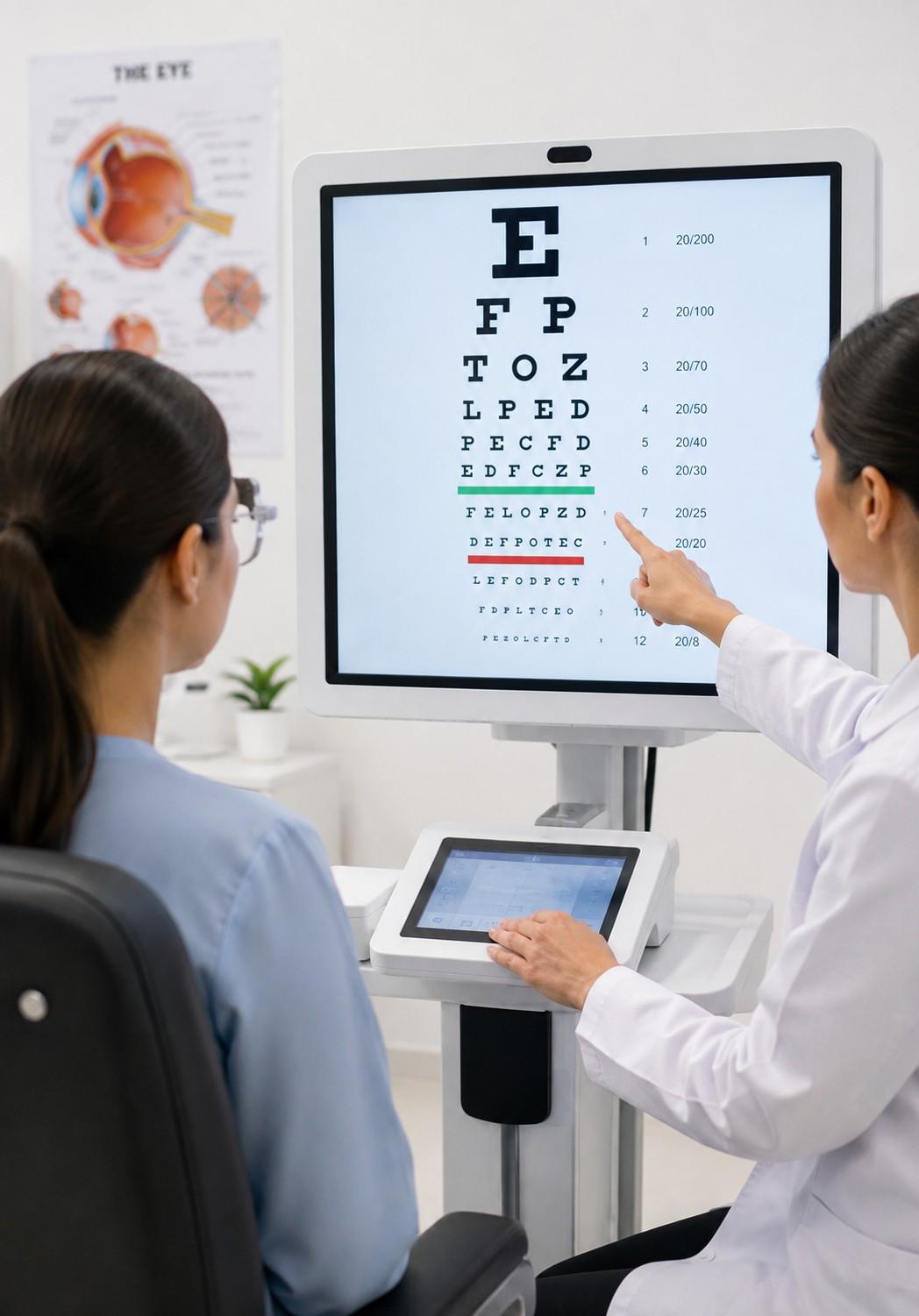
Digital Vision Charts for Eye Testing in Vadodara

Digital Vision Chart Test at Sattva Eye Hospital Vadodara
Digital Vision Chart Test in Vadodara

Digital Vision Chart Testing at Sattva Eye Hospital

Reading letters from a vision chart is one of the most familiar eye tests, and it is often the first assessment performed during an eye examination. Whether you are visiting for a routine check-up or a follow-up after eye surgery, visual acuity testing helps your ophthalmologist understand how clearly you can see.

At Sattva Eye Hospital in Vadodara, we use digital vision charts instead of relying only on a fixed printed chart. The basic principle remains simple — you read the smallest line you can see — but digital testing provides greater flexibility, consistent presentation, and more controlled testing conditions.

What a Digital Vision Chart Actually Changes: A traditional printed eye chart displays the same fixed letters in the same arrangement each time. Patients who have been tested repeatedly may sometimes remember parts of the chart, which can affect how accurately the result reflects their actual visual acuity.

A digital chart can randomise the letters displayed during testing, helping ensure that the result is based on what you can genuinely identify rather than what you remember from a previous visit.

Digital systems also allow the size, spacing, and contrast of the optotypes to be controlled consistently. This supports more standardised visual acuity testing for adults, children, and patients being monitored after eye procedures.

Because the chart can also be projected through a mirror, testing can be performed at an appropriate viewing distance even when the examination room does not have enough physical length for a conventional chart lane.

Get Your Vision Checked in Vadodara — Visit Sattva Eye Hospital for digital visual acuity testing, including computerised and LogMAR-based assessment when clinically required.

Why Precise Vision Measurement Matters at Sattva Eye Hospital

Digital vision testing can detect smaller changes in visual acuity than traditional line-by-line chart scoring
LogMAR scoring provides a finer-grained measurement by recording visual acuity letter by letter
More detailed measurements make it easier to compare visual acuity accurately from one visit to another
Useful for documenting vision before and after cataract surgery and assessing changes following treatment
Helps monitor visual recovery after procedures such as vitrectomy by providing consistent measurements over time
Supports monitoring of gradual visual changes in conditions such as glaucoma where small differences may be clinically meaningful
Consistent digital presentation helps reduce the effect of memorising a fixed chart and improves the reliability of repeated visual acuity assessments
Digital Vision Chart Testing

Testing Options Built Into the Same System

Our digital vision chart system supports multiple testing formats, allowing visual acuity and related vision functions to be assessed according to each patient's needs.

Contrast Sensitivity Testing

Helps identify visual difficulties that a standard letter chart may not detect, including reduced contrast vision and changes associated with early cataract-related glare.

Near Vision Testing

Measures visual acuity at reading distance and helps assess how clearly you can see close-up text and everyday reading material.

Alternative Optotypes

Tumbling E and Landolt C formats can be used for patients who cannot read English letters, making visual acuity testing more accessible.

Randomised Repeat Testing

Digital charts can randomise the letters and symbols shown during repeat visits, helping reduce memorisation and making comparisons over time more reliable.

DIGITAL VISION CHART TESTING

Vision Testing for Children

Our digital vision chart system makes visual acuity testing easier for children by offering age-appropriate symbols, simple direction-based tests, and flexible testing formats within the same system.

Child-Friendly Vision Testing

Digital testing formats make the examination easier for children who may not yet recognise or read standard alphabet-based vision charts.

Tumbling E Test

Children can identify the direction in which the E is facing by pointing, making this useful for children who are not yet comfortable reading letters.

Matching Symbol Tests

Younger children can use familiar matching-symbol formats to assess visual acuity without requiring them to identify written letters.

Controlled Testing Distance

The chart can be used at the appropriate testing distance or displayed through a mirror when room space is limited, while maintaining the required viewing setup.

Remote Chart Control

The technician can change chart lines and randomise letters remotely, allowing the test to be adjusted smoothly according to the patient's responses.

Vision With Glasses or Trial Lenses

Vision can be recorded with the current glasses or a trial lens in place, helping the examiner compare unaided and corrected visual acuity when required.

How Digital Vision Testing Fits Into Your Visit

Provides a baseline visual acuity measurement before the rest of your eye examination begins
Quick testing that takes only a few minutes during a routine eye consultation
Supports accurate comparison of vision before and after procedures such as cataract surgery or vitrectomy
Randomised digital letters help reduce the effect of memorising a previous chart
Properly calibrated digital charts provide consistent letter size, spacing and contrast during testing
Digital charts are available across consultation rooms for reliable and convenient vision testing in Vadodara

Frequently Asked Questions

Find answers to common questions about digital vision chart testing, LogMAR visual acuity, children's vision testing, preparation, procedure time, and digital eye charts at Sattva Eye Hospital, Vadodara.

For most adults, reading letters is the core of the test. However, the digital system can also switch to formats such as contrast sensitivity testing or near-vision testing depending on what your ophthalmologist needs to assess.

The letters can be randomised so your result reflects what you can actually see during that visit rather than what you may remember from a previous test using a fixed eye chart.

Yes. Children who cannot yet read letters can be tested using the Tumbling E test or age-appropriate symbol-matching formats, allowing visual acuity to be assessed without requiring alphabet recognition.

No. Digital vision chart testing is completely non-contact. You simply look at the chart and read or identify the letters, symbols, or patterns you can see.

A 6/6 vision reading means you can see at 6 metres what a person with standard visual acuity is expected to see at the same distance. It is equivalent to 20/20 vision when measured using the feet-based Snellen system.

Yes. Bring your current glasses with you. Your ophthalmologist or technician may check your vision both with and without your current glasses to understand your existing correction and determine whether further testing is needed.