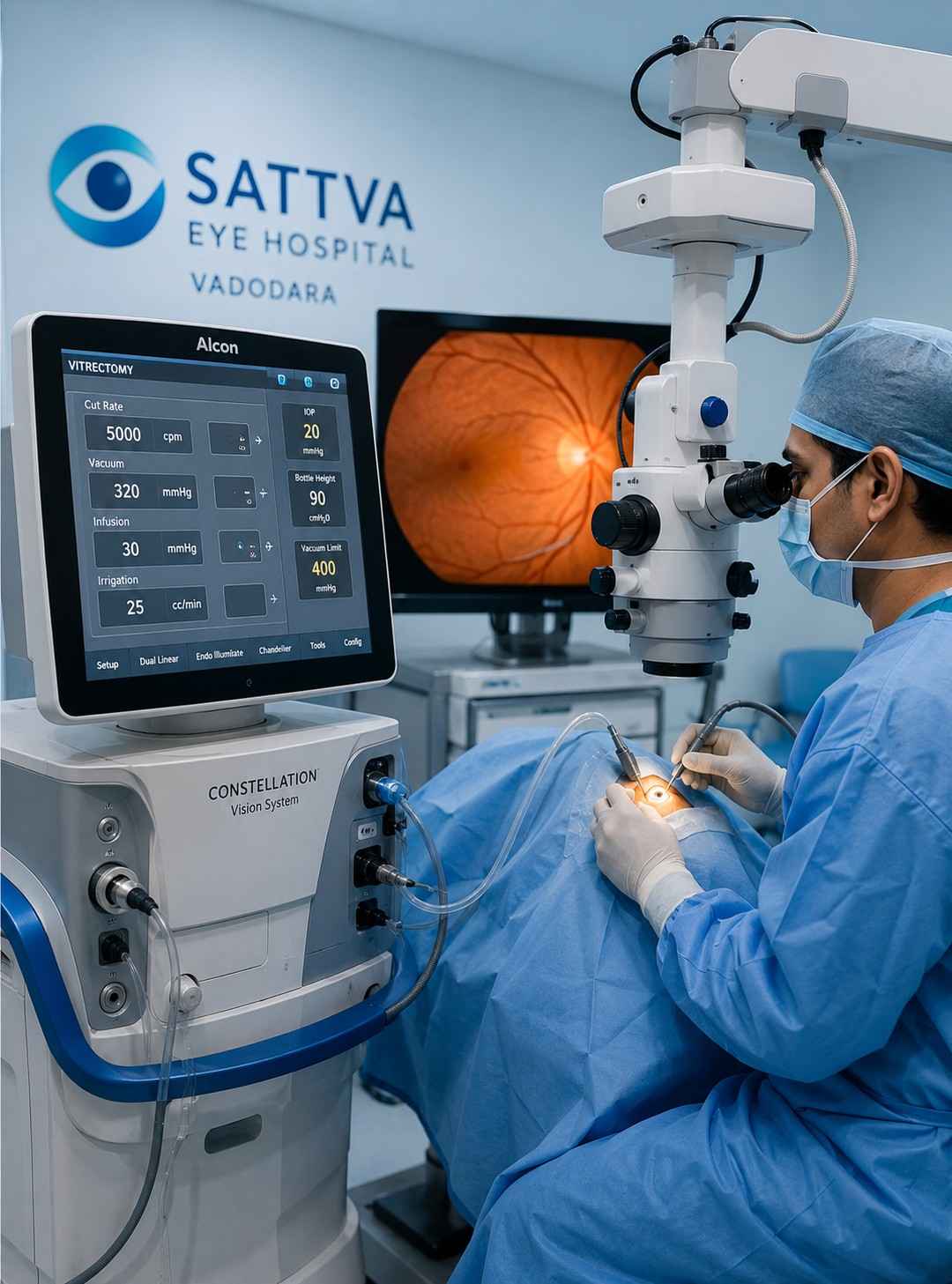
Vitrectomy is one of the few eye surgeries where the result depends almost as much on the technology in the operating room as on the surgeon's expertise. The vitrectomy machine controls how the vitreous gel is removed, how fluid moves through the eye, and how stable the internal eye pressure remains during surgery.
At Sattva Eye Hospital in Vadodara, our retina unit uses modern vitrectomy technology for a range of vitreoretinal procedures, including retinal detachment repair, diabetic vitreous haemorrhage treatment, and macular hole surgery.
What a Vitrectomy Machine Actually Does: A vitrectomy machine works with three fine instruments introduced into the eye through small openings in the pars plana. One provides illumination inside the eye, another maintains fluid flow and eye pressure, while the third is the vitreous cutter that removes the gel-like vitreous in precise, controlled amounts.
The instruments used during vitrectomy are measured in gauge, and the size of the system can influence the surgical approach. Modern 23, 25, and 27-gauge systems allow surgeons to work through very small incisions. Many procedures using these micro-incision systems can therefore be performed without conventional sutures.
How Our Retina Unit Uses This Technology: Our operating theatre is equipped for vitreoretinal procedures with a micro-incision vitrectomy platform, wide-angle retinal viewing technology, and adjustable cut rates and vacuum settings. These controls allow the surgeon to tailor the machine settings to the specific requirements of each case.
Instrument sets are sterilised and prepared before every procedure, while the surgical team is experienced in supporting vitreoretinal cases. During consultation, patients can also discuss the technology, gauge system, and surgical approach recommended for their particular retinal condition.
Consult Our Retina Team in Vadodara — If you are considering vitreoretinal surgery, speak with our ophthalmology team to understand the recommended procedure, technology, and treatment plan for your eye.
Vitrectomy surgery may be recommended for several conditions affecting the retina and vitreous when other treatments are not sufficient or when surgical intervention is required.
Vitrectomy can be used to repair retinal detachment, where the retina has separated from the back wall of the eye and requires surgical treatment.
Surgery may help clear blood from the vitreous, particularly in cases of advanced diabetic retinopathy or other retinal conditions causing significant bleeding.
Vitrectomy can treat macular conditions that distort or blur central vision, including macular holes and epiretinal membranes.
Vitrectomy may be required when an intraocular lens becomes dislocated or lens fragments remain inside the eye after complicated cataract surgery.
In selected cases of severe eye infection such as endophthalmitis, vitrectomy may be considered when medication alone does not provide adequate control.
Surgery may be considered when dense floaters or vitreous opacities significantly interfere with vision and affect daily activities.
Vitrectomy surgery at Sattva Eye Hospital is planned around the specific retinal condition, with detailed evaluation before surgery and personalised instructions for recovery.
Before surgery, your retina specialist performs a detailed eye examination and may recommend OCT imaging to assess the retina and macula in greater detail.
If blood, cataract, or other cloudiness prevents a clear view of the retina, a B-scan ultrasound may be used to help the surgeon understand the condition behind the obstruction.
Most vitrectomy procedures are performed under local anaesthesia with sedation, helping you remain comfortable throughout the surgery.
The surgeon removes the affected vitreous and treats the underlying retinal problem, which may involve membrane peeling, sealing a retinal tear, or clearing blood.
Depending on the retinal condition, the surgeon may use a temporary gas bubble or silicone oil to help support the retina while it heals.
Most patients can go home the same day with an eye shield and prescribed drops. If a gas bubble is used, specific head positioning may be required during recovery.
Find answers to common questions about vitrectomy surgery, micro-incision vitrectomy, recovery, anaesthesia, gas bubbles, activity restrictions, and vitrectomy surgery at Sattva Eye Hospital, Vadodara.