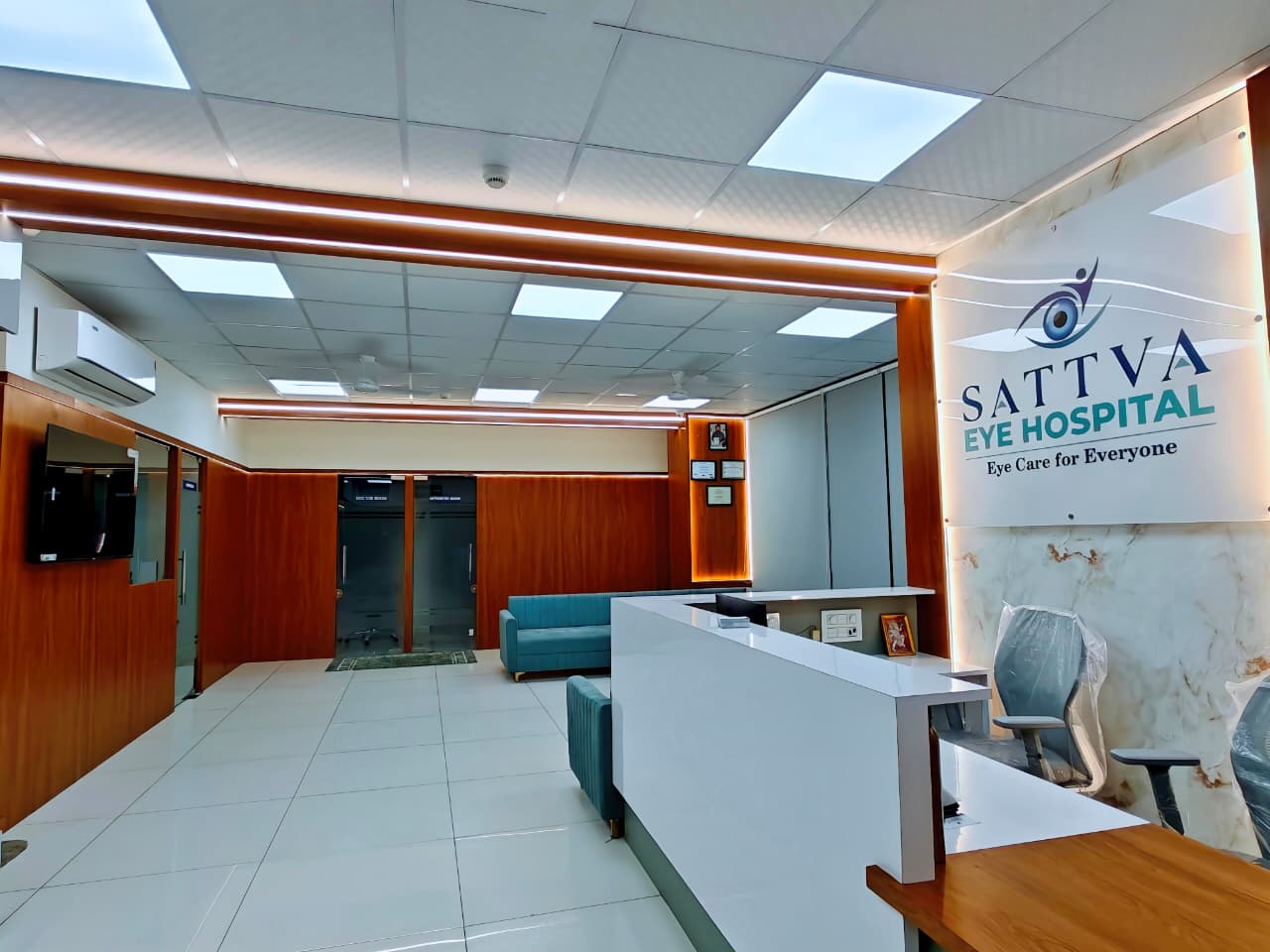
How to Choose the Right Eye Hospital in Vadodara? 10 Things to Check Before Your Treatment
Choosing an eye hospital usually
happens at an awkward moment: a diagnosis you did not expect, a parent who can
no longer read the newspaper, a child whose teacher says they squint at the
board. Search results in Vadodara offer dozens of options, and almost all of
them describe themselves as the best. This guide gives you something more
useful than another claim: ten specific things you can check yourself before
your treatment begins, with the question to ask for each and the warning sign
to watch for. It applies to any eye hospital you are considering, and near the
end we show how Sattva Eye Hospital, Vadodara, maps to the checklist using only
what its website states.
Quick answer: Before choosing an eye hospital in Vadodara, check ten things: the
surgeon's qualifications, diagnostic equipment, range of specialties, surgical
technology, how clearly options are explained, cost transparency, registration
and hygiene standards, follow-up and emergency access, location, and whether
the hospital's name, address and reviews are consistent and verifiable online.
How to Use This Checklist
You do not need to check all ten
items with the same intensity. For a routine eye test, items 1, 2 and 9 matter
most. For surgery, such as cataract or retinal procedures, every item deserves
attention, and it is worth doing the checks before the appointment rather than
during it. Most can be verified in about ten minutes from a hospital's website
and a phone call.
The 10 Things to Check
1. The Ophthalmologist's Qualifications and Subspecialty
Start with the surgeon, not the
building. In India an ophthalmologist typically holds an MBBS followed by a
postgraduate qualification such as MS, DNB or DOMS, sometimes with fellowship
training in a subspecialty such as cataract, retina, glaucoma or pediatric
ophthalmology. Where the training took place and how long it lasted are
independently checkable facts. A named doctor with a listed training path is a
stronger signal than a hospital that only shows a brand.
Ask this: Who will
actually examine me and operate, what are their qualifications, and what is
their main area of focus?
Red flag: Credentials
that are vague, missing from the website, or the doctor is only introduced by
first name.
2. Diagnostic Equipment That Matches Your Condition
Treatment is only as good as the
diagnosis behind it. For a routine exam, look for digital vision testing,
autorefraction and non-contact tonometry (eye pressure). For cataract planning,
optical biometry matters because it calculates the lens power for your eye. For
retinal and diabetic eye problems, OCT scanning and dilated fundus examination
are standard. For glaucoma, ask about pressure measurement, optic nerve
evaluation and visual field testing. If a hospital has to send you elsewhere
for basic tests, expect added delay and cost.
Ask this: Which tests
will you do for my problem, and which of them are done here rather than
referred out?
Red flag: A treatment
recommendation made without any examination or testing specific to your eyes.
3. A Range of Services That Covers You, Not Just Today's Problem
Many eye conditions are not
settled in one visit. A routine check can reveal early glaucoma or a retinal
finding, and diabetes means regular retinal screening for years. A hospital
covering cataract, glaucoma, retina, pediatric care, oculoplasty, uveitis and
neuro-ophthalmology under one roof lets you continue with the same team and the
same records instead of starting over. A narrower clinic can still be right for
a narrow problem, as long as it is honest about what it does not treat.
Ask this: If my tests
show something beyond what I came for, can you manage it here, or will you
refer me?
Red flag: A hospital that
claims to treat everything but cannot say who handles which condition.
4. Surgical Technology and Technique
If surgery is possible, ask how
it will be done. For cataracts, modern sutureless phacoemulsification and
micro-incision techniques use small incisions and are generally associated with
faster visual recovery than older large-incision methods. For retinal
conditions that may need an operation, ask whether vitrectomy equipment is
available on site. Laser capability, such as Nd:YAG, matters for follow-up
procedures after cataract surgery. You are not expected to judge the equipment
itself, only to hear a clear answer.
Ask this: Which technique
will be used for me, and why is it suited to my eye?
Red flag: An answer that
cannot name the technique, or a one-size-fits-all package offered regardless of
your findings.
5. How Clearly Your Diagnosis and Options Are Explained
After the consultation you
should be able to say what condition you have, why it happened, what the
options are, and what happens if you wait. A good consultation includes the
option of monitoring rather than operating when that is medically reasonable. This
is the one item a website cannot prove, so notice it at your first visit. If
you leave more confused than you arrived, a second opinion is a normal and
reasonable step.
Ask this: What happens if
I wait, and what would make this more urgent?
Red flag: Pressure to
decide on non-urgent surgery the same day, or dismissal of your questions.
6. Transparency About Costs, Lens Options and What Is Included
Surgery costs vary with the
technique, the type of implant or lens, and your individual eyes, so a single
figure quoted over the phone is rarely the full picture. Ask for an estimate
after your examination, and ask what it includes: tests, the procedure,
medicines, and follow-up visits. If you are offered a choice of lenses, ask
what each option changes about your vision and why it is or is not suited to
you. Check with your insurer separately, since coverage varies between policies
and procedures.
Ask this: What does the
estimate include, and what could change it?
Red flag: Vague pricing,
add-ons introduced only after you have committed, or premium options presented
as the only choice.
7. Registration, Hygiene and Sterilisation Standards
A hospital should be able to
show that it is properly registered, and the treating doctor should hold a
valid medical council registration. For surgery, it is reasonable to ask about
operating-theatre sterilisation practice and how infection risk is managed. A
confident, specific answer matters more than an impressive-sounding brochure.
Accreditations are one signal among several, and their absence does not by
itself mean poor care, but it should prompt you to ask more questions.
Ask this: Can you share
the hospital's registration details and the doctor's registration number?
Red flag: Reluctance to
share registration details, or answers about sterilisation that are vague or
defensive.
8. Follow-Up Care and Emergency Access
Eye care rarely ends on the day
of treatment. After cataract surgery you will usually need a check within a day
or two and another some weeks later; glaucoma needs regular pressure checks;
diabetic eye disease needs periodic screening. Check the clinic's regular
hours, how to reach them for a worrying symptom such as sudden pain or vision
change, and what happens outside opening hours. Facilities like an on-site
optical shop and pharmacy save a trip, especially for older patients.
Ask this: Who do I
contact if something feels wrong after treatment, and how quickly can I be
seen?
Red flag: No clear route
for urgent concerns, or a clinic that is hard to reach by phone before you are
even a patient.
9. Location and Practical Accessibility
Because follow-up visits matter,
a hospital you can reach comfortably is worth more than one that is slightly
better on paper but difficult to get to. Think about travel time from your
home, parking or drop-off, and whether an elderly family member can manage
repeat visits. Check the address on a map and confirm the opening hours
directly rather than relying on a directory listing, which may be out of date.
Ask this: What are the
opening hours, and how long are typical waits?
Red flag: Directory
listings that disagree with the hospital's own website on address, phone number
or hours.
10. A Consistent, Verifiable Identity and Honest Reviews
Similar names are common in
healthcare, and Vadodara is no exception. Before you travel, confirm the exact
hospital name, address and phone number on the hospital's own website and on
Google Maps, and make sure they match. Then read recent patient reviews in
full, not just the star average, and treat them as one input rather than the
whole picture. Reviews tell you about communication and waiting; they cannot
tell you whether a particular treatment suits your eyes.
Ask this: Is this the
same hospital, at the same address, that I found online?
Red flag: Details that differ between listings, or reviews that read as identical, unusually uniform, or unrelated to eye care.
Red Flags to Watch For
Across all ten items, a few
patterns should make you slow down regardless of the hospital:
- Guaranteed results or claims that a procedure is
risk-free. No responsible provider can promise either.
- Pressure to book non-urgent surgery immediately, or a
limited-time discount on a medical procedure.
- A treatment plan proposed before your eyes have been
properly examined.
- No named doctor, or credentials that cannot be
confirmed.
- Unwillingness to explain the technique, the costs, or
the alternatives, including monitoring.
- Online details such as name, address or phone number
that do not match from one listing to the next.
Checks That Matter Especially in Vadodara
- If you have diabetes, ask specifically about dilated
fundus examination and diabetic retinopathy screening, not only a general eye
test. Diabetic eye disease can progress without early symptoms.
- Confirm the exact name, address and phone number before
you travel. Several eye clinics in Gujarat have similar-sounding names under
separate ownership, and an appointment at the wrong location costs time you may
not have.
- For follow-up visits, think about city traffic and
distance from home, particularly if an older relative will be travelling.
- Ask whether you can discuss your diagnosis in the
language you are most comfortable with. Understanding your own condition is
part of consenting to treatment.
About Sattva Eye Hospital in Vadodara: How It Maps to the Checklist
Sattva Eye Hospital's website
states the following, which you can verify yourself against the checklist
above:
- Qualifications (item 1): care is led by Dr. Ankit Ahir,
MBBS, DOMS, DNB (Ophthalmology), MNAMS, a cataract and anterior segment
surgeon. The listed training includes M & J Institute of Ophthalmology,
B.J. Medical College, Ahmedabad, and Sri Sankaradeva Nethralaya, Guwahati.
- Diagnostics (item 2): OCT scan, optical biometry, A-B
scan ultrasound, non-contact tonometry, digital vision charts with
autorefraction, and fundus and anterior segment photography.
- Range of services (item 3): comprehensive eye
examinations, cataract, glaucoma, retinal and diabetic eye care, pediatric eye
care, oculoplasty, uvea clinic, neuro-ophthalmology, and LASIK evaluation and
counseling, with cornea and refractive services also listed in the site's
service menu.
- Surgical technology (item 4): sutureless
phacoemulsification and micro-incision cataract surgery, a vitrectomy machine,
and Nd:YAG and Argon laser.
- Explanation (item 5): the hospital describes a
five-step journey of consultation, diagnosis, planning, treatment and
follow-up, and says it aims to explain diagnosis and options in plain language.
How that feels in practice is yours to judge at your first visit.
- Follow-up and access (items 8 and 9): OPD hours are
Monday to Saturday, 11:00 AM to 8:00 PM, with Sunday for emergencies only; the
phone number is +91 75760 82474; an optical shop and pharmacy are listed among
the facilities.
- Identity (item 10): the website states that Sattva Eye
Hospital is a single, independently owned eye hospital based in Vadodara and is
not affiliated with any other eye hospital or clinic operating under a similar
name.
Items 6 and 7, costs and
registration, are best confirmed in person, as they are for any hospital. Ask
for a written estimate after your examination and ask for registration details
at your first visit.
Sattva Eye Hospital is located
at Sthapatya, Parmeshwar Park, Nizampura Road, near Mehsana Circle, Nizampura,
Vadodara, Gujarat 390024. You can book an appointment through the hospital's
website or by calling +91 75760 82474.
Conclusion
The right eye hospital is the
one you can verify, understand and reach. Use the ten checks above to move from
“who claims to be best” to “who can show me,” and treat your first consultation
as part of the evaluation rather than only the start of treatment. If something
does not add up, a second opinion costs little compared with the value of a
decision made on clear information.
If you are weighing options for
cataract, glaucoma, retinal, pediatric or LASIK evaluation, consider booking a
consultation at Sattva Eye Hospital, Vadodara, and bring this checklist with
you. A good hospital will welcome the questions.
FAQs
1. How do I choose the right eye hospital in Vadodara?
Check the surgeon's
qualifications, the diagnostic equipment, the range of services, the surgical
technology, how clearly options are explained, cost transparency, registration
and hygiene standards, follow-up and emergency access, location, and whether the
hospital's name, address and reviews are consistent online.
2. What qualifications should an eye surgeon have in India?
A fully qualified
ophthalmologist typically holds an MBBS plus a postgraduate qualification such
as MS, DNB or DOMS, sometimes with fellowship training in a subspecialty. Ask
where the training took place and what the surgeon's main focus is.
3. Should I get a second opinion before eye surgery?
A second opinion is reasonable
and common, especially for surgery that is not urgent, or if you leave a
consultation unsure about the diagnosis or the options. A good ophthalmologist
will not object to it.
4. Is a bigger hospital always better for eye treatment?
No. What matters is the treating
surgeon's experience, the diagnostic and surgical facilities relevant to your
condition, and the quality of follow-up, which do not depend on hospital size
alone.
5. How can I check whether an eye hospital is properly
registered?
Ask the hospital for its
registration details and the treating doctor's medical council registration
number. Both should be shared on request without hesitation.
6. What should I ask before cataract surgery?
Ask which technique will be used
and why, how the lens power will be calculated, what the estimate includes,
what the recovery and follow-up schedule looks like, and what happens if you
choose to wait and monitor instead.
7. How much should I rely on online reviews?
Treat reviews as one input. Read
recent ones in full rather than relying on the star average, and remember that
reviews reflect communication and experience, not whether a specific treatment
suits your eyes.
8. What tests should I expect at a first eye consultation?
This depends on your symptoms,
but commonly includes vision testing, eye pressure measurement and a dilated
examination of the retina, with further tests such as OCT or biometry if your
condition calls for them.
9. How do I avoid going to the wrong clinic when names are
similar?
Confirm the exact hospital name,
address and phone number on the hospital's own website and on Google Maps
before you travel, and check that they match.
10. How do I book an appointment at Sattva Eye Hospital in
Vadodara?
You can book through the
appointment page on the hospital's official website, sattvaeyehospital.com, or
call +91 75760 82474 to schedule a consultation.