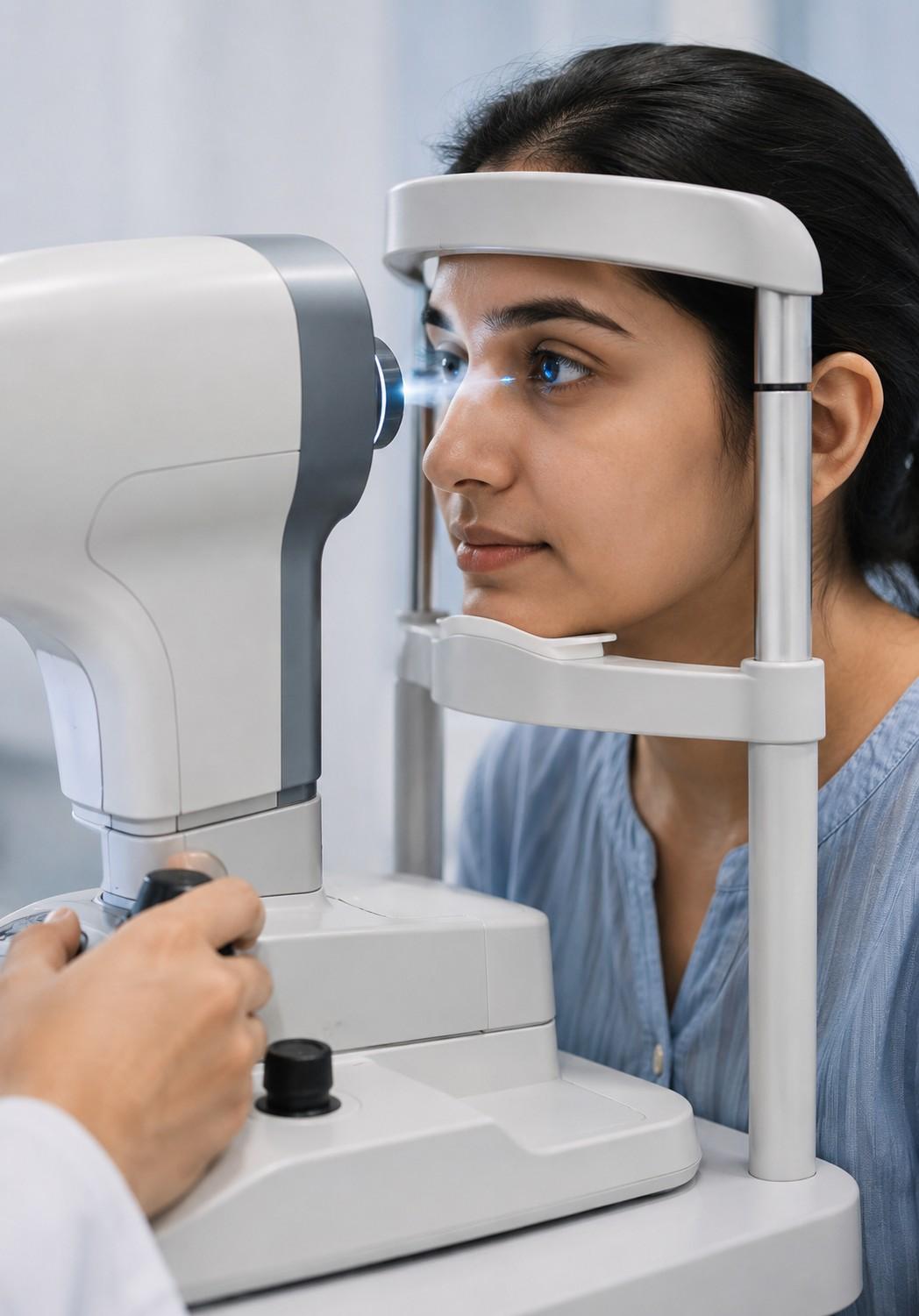
Non-Contact Tonometry: The Eye Pressure Test in Vadodara

Non-Contact Tonometry Air Puff Eye Pressure Test in Vadodara at Sattva Eye Hospital
Non-Contact Tonometry in Vadodara

Quick & Painless Eye Pressure Test at Sattva Eye Hospital

If you've ever had a routine eye check-up that ended with a sudden puff of air catching you off guard, you've already had this test. Non-contact tonometry, usually just called the air puff test, measures the pressure inside your eye without touching it at all. It takes seconds, needs no numbing drops, and is one of the most common tests done at Sattva Eye Hospital in Vadodara.

The test is part of many general eye examinations and is not limited to patients specifically visiting for glaucoma. Measuring intraocular pressure (IOP) gives your ophthalmologist an important number that can help identify whether further evaluation may be required.

What Non-Contact Tonometry Actually Measures: Your eye continuously produces and drains a clear fluid called aqueous humour. The balance between how much fluid is produced and how much drains away helps determine the pressure inside the eye.

When drainage slows down, pressure can increase. Sustained high eye pressure is one of the important risk factors associated with damage to the optic nerve, which carries visual signals from the eye to the brain.

Non-contact tonometry gives your doctor an intraocular pressure reading, measured in millimetres of mercury (mmHg). The result helps flag whether your eye pressure falls within a range that may need closer examination or additional glaucoma testing.

How the Test Works: You'll rest your chin and forehead against a small frame and look straight ahead at a light inside the machine. A brief, focused pulse of air is released toward the surface of the eye.

A sensor measures how much the cornea flattens in response to the air pulse and how quickly it returns to its original shape. The resistance of the cornea helps the instrument estimate the pressure inside the eye.

The machine usually takes a few readings from each eye in quick succession and averages them. The entire test is typically completed within one to two minutes, without numbing drops and without touching the surface of the eye.

Book Your Eye Pressure Test in Vadodara — Visit Sattva Eye Hospital for a routine IOP check, glaucoma risk assessment, or comprehensive eye examination.

Understanding Non-Contact Tonometry & Eye Pressure Results

Non-contact tonometry is a quick screening test used to measure intraocular pressure and identify patients who may need further evaluation
The air puff test is convenient and comfortable, but it is not considered the most precise method for confirming an eye pressure reading
Goldmann applanation tonometry remains the clinical reference method and may be used to confirm an elevated or unexpected air-puff reading
A high IOP reading alone does not mean that a person has glaucoma and needs to be interpreted alongside other eye examination findings
Eye pressure can naturally fluctuate during the day and readings may vary between individuals, so one measurement should not be viewed in isolation
Some people with elevated pressure may have ocular hypertension and only require regular monitoring, rather than having glaucoma
Some people can develop glaucoma even when their eye pressure falls within the usual range, which is why IOP testing is combined with optic nerve examination and other assessments
Non-Contact Tonometry

Who Should Get This Test

Non-contact tonometry is a quick and comfortable way to measure intraocular pressure and can be included as part of routine eye examinations or glaucoma risk assessment.

Routine Eye Examination

Adults may have their eye pressure checked as part of a routine annual or biennial eye examination, depending on their age, eye health, and ophthalmologist's advice.

Family History of Glaucoma

People with a family history of glaucoma may benefit from regular eye pressure checks because having an affected family member can increase personal risk.

Diabetes & High Myopia

People with diabetes or high myopia may require regular pressure monitoring as part of a comprehensive eye examination and assessment of glaucoma-related risk.

Glaucoma Monitoring

Anyone already diagnosed with glaucoma may need regular intraocular pressure measurements to help monitor their condition and response to treatment.

Children & First-Time Patients

Children and people having their first eye examination may find the air-puff test easy to tolerate because it requires no numbing drops and does not involve contact with the eye.

Quick Eye Pressure Screening

The test takes only a short time and can be easily included in a comprehensive eye examination when your doctor wants to check or monitor intraocular pressure.

EYE PRESSURE & GLAUCOMA SCREENING

What Happens If Your Eye Pressure Is High

A high air-puff reading does not automatically mean glaucoma. At Sattva Eye Hospital, an elevated screening result can be followed by further clinical assessment to confirm the pressure and evaluate the health of the optic nerve.

Confirming the Reading

A high non-contact tonometry reading may be checked using Goldmann applanation tonometry, which provides a more precise clinical measurement of intraocular pressure.

Optic Nerve Examination

Your ophthalmologist may examine the optic nerve, including after pupil dilation, to look for signs of structural changes that could be associated with glaucoma.

Visual Field Testing

A visual field test may be recommended to check peripheral vision and identify functional changes that can occur with glaucoma.

Narrow Drainage Angle Assessment

If examination suggests that the drainage angle is narrow, your ophthalmologist may discuss additional preventive treatment options based on your individual eye health.

Nd:YAG Laser Iridotomy

When clinically appropriate for a narrow drainage angle, your doctor may discuss preventive Nd:YAG laser iridotomy as part of the overall glaucoma risk assessment.

Same-Visit Follow-Up

When a screening result is outside the expected range, the appropriate confirmatory pressure check and clinical assessment can be arranged during the same visit, helping avoid unnecessary delays.

Frequently Asked Questions

Find answers to common questions about non-contact tonometry, the air puff eye pressure test, intraocular pressure, glaucoma screening, preparation, and routine eye pressure checks at Sattva Eye Hospital, Vadodara.

No. The air puff test does not cause pain, does not involve a needle, and nothing touches the surface of the eye. The sudden puff of air can startle some people the first time, but the actual test is quick and comfortable.

Most healthy eyes fall within a broad expected range, but a single number should not be interpreted on its own. Your ophthalmologist considers your eye pressure together with optic nerve health, medical history, and other glaucoma risk factors.

Yes. Since non-contact tonometry requires no numbing drops and does not touch the eye, it can be a convenient and easy-to-tolerate method for measuring eye pressure in children when the ophthalmologist considers it appropriate.

For many healthy adults, checking eye pressure once a year or every two years as part of a routine eye examination may be appropriate. People with glaucoma risk factors may be advised to have their eye pressure checked more often based on their doctor's recommendation.

Not necessarily. A high eye pressure reading is a reason for further evaluation, not a glaucoma diagnosis by itself. Your doctor may confirm the pressure and examine the optic nerve and visual field before determining whether glaucoma or another condition is present.

No special preparation is usually required. You do not need to fast, and the air puff test alone does not require pupil dilation, so you can generally continue your normal activities afterward without arranging for someone to drive you home.