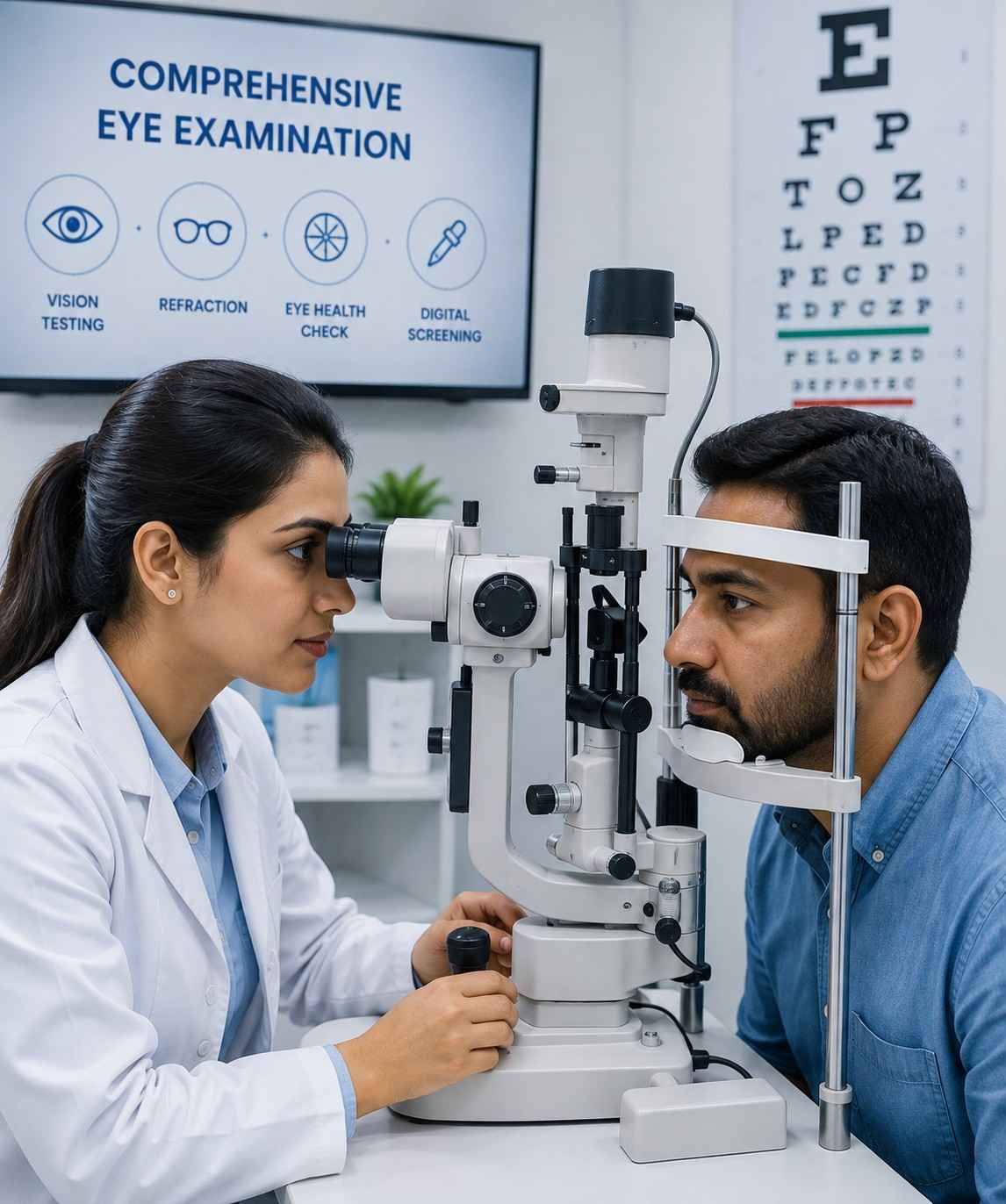
Comprehensive Eye Examination in Vadodara

Comprehensive Eye Examination at Sattva Eye Hospital Vadodara
Comprehensive Eye Examination in Vadodara

Complete Eye Examination for Your Vision & Eye Health

It's easy to assume your eyes are fine simply because your vision feels normal — but some of the most common eye conditions, including glaucoma and diabetic eye disease, can develop for years without any noticeable change in sight. A comprehensive eye examination looks well beyond "can you read the chart," assessing the overall health of your eyes so problems can be caught while they're still easiest to manage.

At Sattva Eye Hospital in Vadodara, our comprehensive eye examination combines vision testing with a detailed health assessment of the eye, tailored to your age, symptoms, and individual risk factors.

About the Service: A comprehensive eye examination is a detailed assessment of both vision and overall eye health. Unlike a basic eyesight check, it helps identify refractive errors as well as early signs of various eye conditions before symptoms appear.

This service is appropriate for almost everyone — including people due for a routine checkup, patients needing an updated glasses or contact lens prescription, individuals with diabetes or a family history of eye disease, parents seeking a vision assessment for their child, and anyone who has not had their eyes examined in the last year or two.

Book Your Comprehensive Eye Examination in Vadodara — Get a complete check of your vision and eye health, not just a quick glasses prescription.

What's Included in Our Comprehensive Eye Examination

Comprehensive Vision & Eye Health Assessment

Our comprehensive eye examination goes beyond a basic eyesight check. We assess your vision along with the overall health and function of your eyes.

The examination helps identify refractive errors and detect early signs of eye conditions that may not yet be causing noticeable symptoms.

Additional diagnostic tests may be recommended based on your age, symptoms, medical history, family history, and individual risk factors.

Visual Acuity Assessment
Refraction & Prescription Testing
Near & Distance Vision Evaluation
Eye Pressure Measurement
External Eye Examination
Slit-Lamp Examination
Pupil Assessment
Alignment & Movement Assessment
Retina & Optic Nerve Evaluation
Visual Field Assessment
Additional Diagnostic Tests When Clinically Appropriate
Early Detection

Conditions We Can Help Detect Early

A comprehensive eye examination can help identify refractive errors and early signs of common eye conditions, sometimes before noticeable symptoms develop.

Refractive Errors

Myopia, hyperopia, astigmatism, and presbyopia affecting how clearly you see.

Cataract

Changes in the natural lens that may gradually affect vision.

Glaucoma

Conditions associated with damage to the optic nerve and possible vision loss.

Retinal Disorders

Changes affecting the retina, including diabetic and age-related retinal conditions.

Diabetic Eye Disease

Eye changes associated with diabetes that may affect vision.

Dry Eye & Ocular Surface Conditions

Problems affecting the tear film and surface of the eye.

Pediatric Vision Problems

Vision and developmental problems that may affect children.

WHY CHOOSE SATTVA EYE HOSPITAL

Why Choose Sattva Eye Hospital for Your Eye Examination in Vadodara?

Expert Clinical Care

Specialized evaluation and treatment for a wide range of eye conditions, led by Dr. Ankit Ahir, MBBS, DOMS, DNB (Ophthalmology).

Advanced Diagnostics

Modern diagnostic technology to support accurate assessment and treatment planning.

Truly Comprehensive Eye Care

From routine examinations to complex surgical and interventional care, all under one roof.

Comprehensive Eye Examination at Sattva Eye Hospital Vadodara

Personalized Treatment

Recommendations designed according to each patient's condition, age, lifestyle, and visual needs.

Access to Specialized Clinics

If your exam identifies a concern, dedicated care pathways for glaucoma, retina, uvea, pediatric ophthalmology, oculoplasty, and neuro-ophthalmology are available immediately.

Patient-Centred Approach

Clear communication, careful evaluation, and compassionate care throughout your visit.

Comprehensive Eye Care Benefits

Benefits of Choosing Our Comprehensive Eye Examination

A comprehensive eye examination provides a detailed assessment of your vision and overall eye health, helping identify concerns early and guiding the right next steps for your care.

Early Detection of Eye Conditions

Helps detect silent conditions like glaucoma and diabetic eye disease before noticeable vision changes occur.

Accurate & Updated Prescription

Receive an accurate, up-to-date prescription when glasses or other vision correction is required.

Complete Eye Health Assessment

Get a full health assessment of your eyes rather than only a quick vision chart or eyesight check.

Direct Access to Specialist Care

If something requires further attention, you can be guided toward the appropriate specialist care pathway.

Testing Tailored to You

Examination and diagnostic testing are tailored to your age, symptoms, medical history, and personal risk factors.

Clear Explanation of Your Results

Receive a clear and understandable explanation of your examination results and any recommended next steps.

COMPREHENSIVE EYE EXAMINATION PROCESS

Our Comprehensive Eye Examination Process

Our comprehensive eye examination follows a structured process to assess your vision, eye health, and potential risk factors while identifying concerns that may require further evaluation.

Step 1 — Visual Acuity Assessment

Testing how clearly you see at both near and distance ranges to establish your baseline visual acuity.

Step 2 — Refraction & Prescription Testing

Determining your exact glasses or contact lens prescription when vision correction is needed.

Step 3 — Eye Pressure Measurement

Checking intraocular pressure as part of your glaucoma risk assessment and overall eye health evaluation.

Step 4 — External & Slit-Lamp Examination

A close examination of the front structures of the eye, including the cornea, lens, eyelids, and other visible ocular structures.

Step 5 — Pupil, Alignment & Movement Assessment

Checking pupillary responses and assessing how well your eyes move and align together during visual examination.

Step 6 — Retina & Optic Nerve Evaluation

A detailed internal examination of the retina and optic nerve, with visual field assessment and additional diagnostic tests recommended when clinically appropriate.

Frequently Asked Questions

Find answers to common questions about comprehensive eye examinations, vision testing, eye health, glaucoma screening, retinal evaluation, and routine eye care at Sattva Eye Hospital, Vadodara.

A comprehensive eye examination is a detailed assessment of your vision and eye health. It may include visual acuity, refraction, eye pressure measurement, slit-lamp examination, retinal evaluation, and additional tests when required.

A basic vision test primarily checks how clearly you can see. A comprehensive examination also evaluates the health of your eyes and can help identify signs of eye diseases that may not initially cause noticeable symptoms.

The duration can vary depending on the patient's age, symptoms, clinical findings, and whether additional diagnostic tests are required.

Yes. Some eye conditions may develop without obvious changes in vision. Routine eye examinations can help assess overall eye health and identify potential problems early.

Yes. Children can undergo age-appropriate vision assessment to identify refractive errors, amblyopia, congenital conditions, and other problems affecting visual development.

Yes. Diabetes can affect the retina, sometimes before noticeable vision symptoms appear. Regular retinal evaluation may help detect diabetic eye changes early.

A comprehensive eye examination can identify findings that may indicate glaucoma or glaucoma risk. Additional tests such as eye pressure measurement and visual field testing may be recommended when appropriate.

This depends on your age, health history, and risk factors. As a general guideline, most adults benefit from an eye examination every one to two years, while those with diabetes, existing eye conditions, or a family history of eye disease may need more frequent visits. Your ophthalmologist can advise on the right schedule for you.