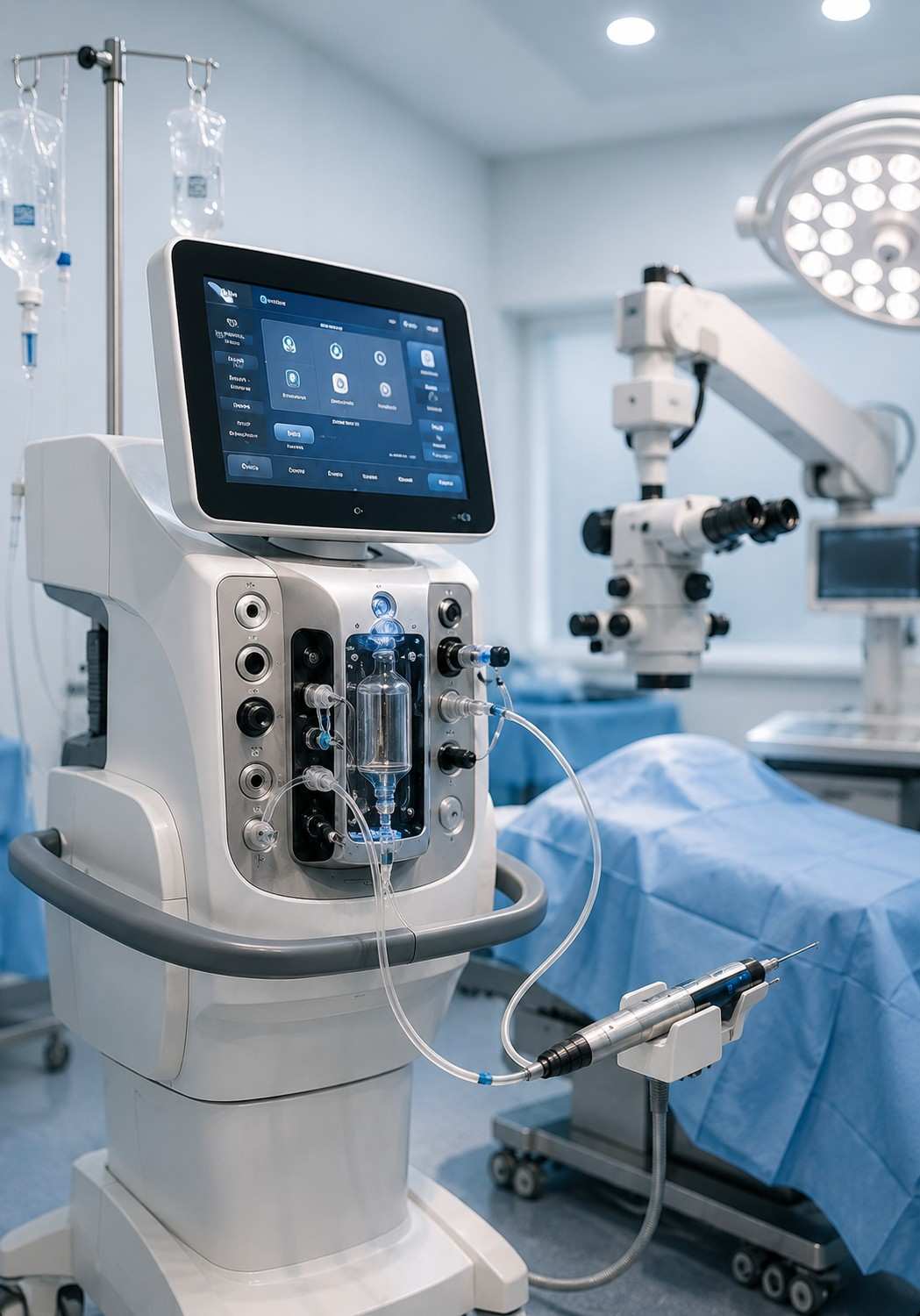
Advanced Phacoemulsification Cataract Surgery at Sattva Eye Hospital
Cataract surgery is one of the most commonly performed surgeries worldwide, and modern cataract procedures are typically performed using a phacoemulsifier rather than older techniques that required larger incisions and stitches. The machine uses controlled ultrasound energy to break the cloudy natural lens into tiny fragments that can be removed through a small corneal opening.
At Sattva Eye Hospital in Vadodara, our cataract surgery setup is built around modern phacoemulsification technology. This allows the surgeon to perform precise cataract removal through a small incision, followed by implantation of an artificial intraocular lens (IOL). Most patients can return home the same day after the procedure, depending on their individual condition and doctor's advice.
What Phacoemulsification Actually Involves: A fine surgical probe is inserted through a small corneal incision and uses ultrasonic vibrations to soften and break the cataract-affected natural lens into smaller fragments. The same system continuously manages fluid inside the eye while the fragmented lens material is gently aspirated through the probe.
Once the cloudy natural lens has been completely removed, a folded artificial intraocular lens, or IOL, is inserted through the small opening. The lens unfolds inside the eye and is positioned securely, usually without requiring stitches.
Inside the Phacoemulsifier Console: Although the handpiece is the part the patient sees, the machine's fluidics play an important role during surgery. The console carefully balances irrigation flow and aspiration vacuum to help maintain the eye's shape throughout the procedure.
The system is also designed to respond quickly when lens material clears from the aspiration pathway and suction changes suddenly. This helps the surgeon maintain better control during different stages of cataract removal.
Our setup supports both torsional and longitudinal ultrasound modes, allowing the surgeon to select the appropriate approach according to the density and characteristics of each cataract. Ultrasound power, vacuum and other machine settings can be adjusted through a foot pedal during surgery, giving the surgeon precise control throughout the procedure.
Explore Phacoemulsification Cataract Surgery in Vadodara — Consult the cataract specialists at Sattva Eye Hospital to understand your treatment options and suitable IOL choices.