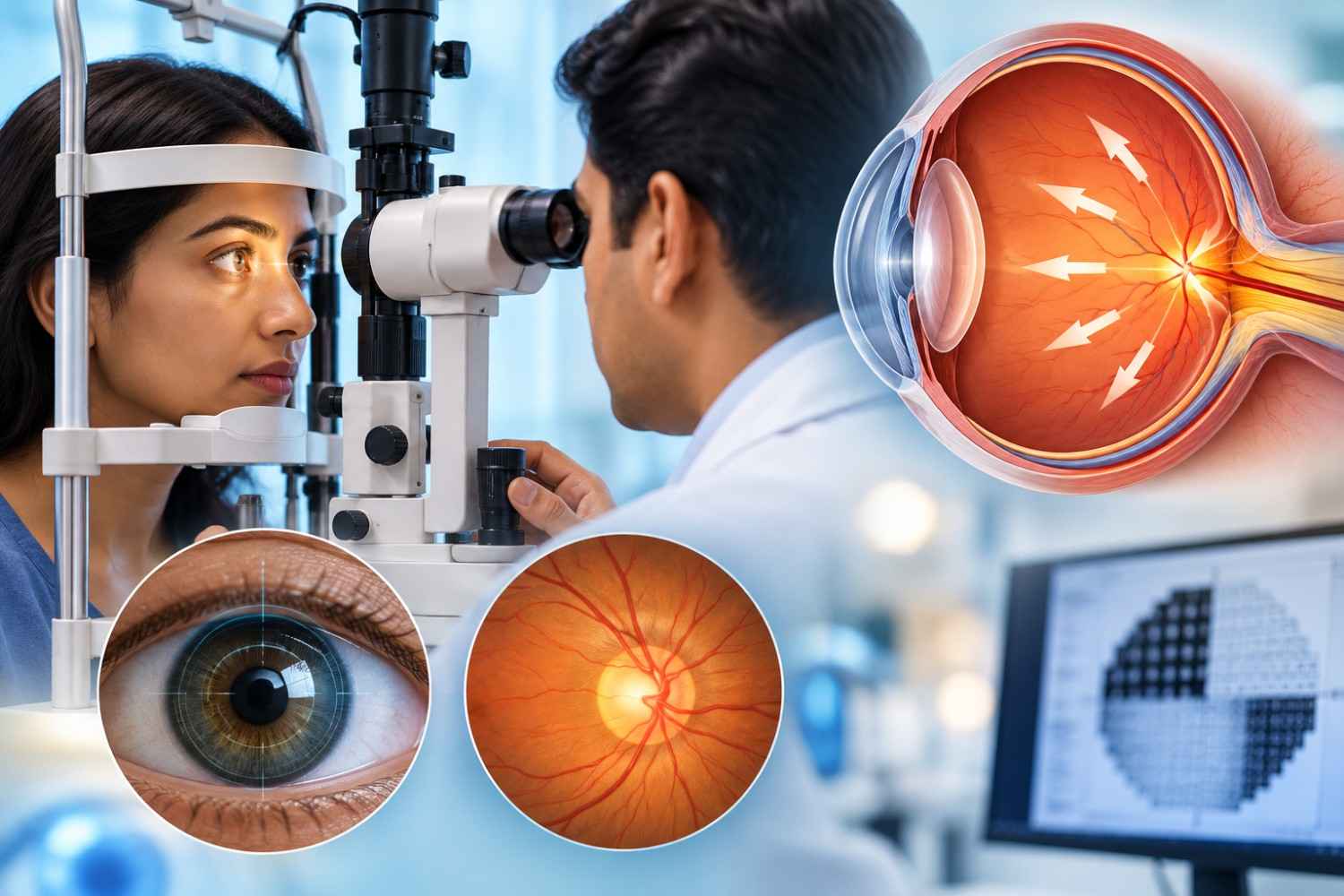
Glaucoma: Symptoms, Diagnosis, Eye Pressure and Treatment Options
Glaucoma is
often called the "silent thief of sight" because it can steal side
vision slowly, without pain, while central vision still looks sharp. Many
people only discover it during a routine eye test. This guide explains the
types and symptoms of glaucoma, what eye pressure does and does not tell you,
how it is diagnosed, and the treatment options doctors may consider.
It is general
education, not a diagnosis. If you live in Vadodara, you will also find a note
on when to seek urgent care and when a routine glaucoma check is appropriate.
What Is Glaucoma?
Glaucoma is a
group of eye conditions that damage the optic nerve, the cable that carries
visual signals from the eye to the brain. It is most often linked to raised
pressure inside the eye, called intraocular pressure (IOP). The eye constantly
makes a clear fluid and drains it through a drainage angle. When drainage is
slow or blocked, pressure can build up and, over time, damage nerve fibres.
Such damage generally cannot be reversed, so treatment aims to protect the
vision that remains.
What Are the Types of Glaucoma?
•
Open-angle glaucoma is the most common type. The
drainage angle looks open, but fluid drains too slowly, and vision is lost
gradually and painlessly.
•
Angle-closure glaucoma happens when the iris
blocks the drainage angle. It can be chronic and slow, or acute and sudden,
which is an emergency. People of Asian descent are more prone to this type.
•
Normal-tension glaucoma causes optic nerve
damage even though eye pressure is within the usual range.
•
Secondary glaucoma results from another cause,
such as an eye injury, inflammation or long-term steroid use.
•
Childhood glaucoma is uncommon and needs
specialised evaluation and management.
What Are the Symptoms of Glaucoma?
Glaucoma usually has no symptoms at first. It generally affects both eyes, although it may be worse in one. Side (peripheral) vision tends to go first, and the brain can fill in the gaps, so people often notice only when the damage is advanced, for example by bumping into objects or missing things at the edge of their vision.
Other
conditions, such as uveitis or an eye injury, can cause similar symptoms, so an
examination is needed to find the cause. Do not wait for symptoms to settle.
Eye Pressure and Glaucoma: What the Numbers Mean
•
High pressure is a risk factor, not a diagnosis.
Some people have raised pressure without glaucoma (ocular hypertension) and may
need only monitoring.
•
Normal pressure does not rule glaucoma out.
Normal-tension glaucoma exists, which is why the optic nerve and vision are
checked as well.
•
Pressure changes through the day, so one reading
is not enough.
•
Test types differ. The air-puff test is a quick
screening method. If a reading is high or unexpected, doctors often confirm it
with a contact method such as Goldmann applanation tonometry.
Treatment
targets are set for each person based on the optic nerve damage and the
pressure at which the disease progresses, so there is no single number that
suits everyone.
Who Is at Higher Risk of Glaucoma?
•
Age, with risk rising after about 40.
•
A family history of glaucoma, especially in a parent or
sibling.
•
Raised eye pressure, or thin corneas.
•
Diabetes, high short-sightedness (myopia), and
extremely high or low blood pressure.
•
Asian descent, which raises the risk of angle-closure
and normal-tension glaucoma.
•
A past eye injury, or long-term use of steroid
medicines.
A risk factor
raises the chance but does not mean you will develop glaucoma. Tell your eye
doctor about your risks and any steroid medicines you take.
How Is Glaucoma Diagnosed?
No single test
diagnoses glaucoma. Eye doctors combine several, which is why one pressure
reading is never the whole picture:
•
Tonometry measures eye pressure.
•
Optic nerve examination, often after the pupil
is dilated, looks for structural damage.
•
Gonioscopy examines the drainage angle and helps
tell open-angle from angle-closure glaucoma.
•
Visual field testing maps central and side
vision to find functional loss.
•
Optical coherence tomography (OCT) images the
optic nerve and nerve fibre layer when indicated.
•
Corneal thickness measurement may be added,
because thin corneas can affect pressure readings and risk.
The tests are
repeated over time, because changes between visits show whether the disease is
stable. Not everyone needs every test.
How Often Should You Have an Eye Examination?
Because early
glaucoma is silent, a comprehensive eye examination that includes a pressure
check and a look at the optic nerve is the main way to find it. Intervals
depend on age and risk. Healthy adults may need checks every year or two, while
people with a family history, diabetes, high myopia, a past injury or steroid
use are usually advised earlier and more frequent examinations. If you already
have glaucoma, your ophthalmologist sets the follow-up schedule. Ask your own
doctor what suits you.
What Are the Treatment Options for Glaucoma?
Treatment
depends on the type of glaucoma, its stage, your eye pressure and optic nerve
health. The goal is to lower pressure and slow further damage. Glaucoma cannot
be cured, and treatment cannot restore vision already lost.
Eye drops
Drops are the
main treatment for most people and usually the first step. There are several
kinds, and they work by reducing fluid production or helping it drain. They
must be used every day as prescribed, even though you may feel nothing, and
some cause irritation or other side effects. Do not stop or change drops
without asking your doctor, and ask for a demonstration of the right technique.
Laser treatment
Laser may be
offered when drops are not enough, or as an early option in some cases. Laser
trabeculoplasty opens the drainage channels in open-angle glaucoma. Laser
iridotomy makes a small hole in the iris so fluid can pass, and is used for
narrow or closed angles. Cyclodiode laser reduces the tissue that makes
fluid. Laser is usually done while you are awake, and you may still need drops
afterwards.
Surgery
Surgery may be
advised when drops and laser have not worked well enough. The most common
operation is trabeculectomy, which creates a new drainage route. Other
procedures include drainage tubes and devices. The choice depends on your eye,
and some people still need drops afterwards.
Acute angle-closure glaucoma
This needs
immediate hospital treatment with medicines to lower the pressure, usually
followed by laser to prevent a repeat attack.
Regular monitoring
Follow-up
visits check pressure, the optic nerve and visual fields so that treatment can
be adjusted. Not every centre offers every option, so ask what is available and
suitable for your eye.
Can Glaucoma Be Cured or Prevented?
Glaucoma cannot
be cured, and damage already done generally cannot be undone. Early detection
and consistent treatment can slow or prevent further loss. Most glaucoma cannot
be prevented, but regular eye examinations, using drops as prescribed,
attending follow-up and protecting your eyes from injury all help. There is no
solid evidence that "eye vitamins" or supplements prevent or treat
glaucoma.
When Should You See an Eye Doctor in Vadodara?
Emergency
symptoms: Severe eye pain with redness, headache, nausea, halos or sudden
loss of vision need same-day assessment. Sattva Eye Hospital's website advises
calling +91 75760 82474 for urgent concerns such as sudden vision loss, injury
or severe pain. Its listed OPD hours are Monday to Saturday, 11:00 AM to 8:00
PM, and Sunday information on the website is inconsistent, so please call and
confirm timings. If you cannot be seen promptly, go to the nearest hospital
emergency department.
Routine check: Book an examination if you are over 40, have a family history of glaucoma, diabetes, high myopia, a past eye injury or steroid use, or if a doctor has found raised eye pressure. Sattva Eye Hospital's glaucoma evaluation page lists intraocular pressure assessment, gonioscopy, visual field testing, optic nerve evaluation and OCT when clinically indicated, with medical management, laser treatment for selected patients and surgery when required. Its non-contact tonometry page describes air-puff screening, confirmation of high readings with Goldmann applanation tonometry, and Nd:YAG laser iridotomy for narrow angles when clinically appropriate.
Frequently Asked Questions About Glaucoma
What are the early symptoms of glaucoma?
Usually there
are none. Side vision fades slowly, so the damage is often found on an eye
examination before it is noticed.
Can glaucoma occur with normal eye pressure?
Yes. In
normal-tension glaucoma the optic nerve is damaged even though pressure is
within the usual range.
Does high eye pressure always mean glaucoma?
No. It is a
risk factor and a reason for further tests. Some people have ocular
hypertension and only need monitoring.
Can glaucoma cause blindness?
Yes, if it is
advanced or poorly controlled. Early detection and regular treatment lower the
risk of serious vision loss.
Can glaucoma be cured, or lost vision restored?
No. Treatment
lowers pressure and slows damage, but it cannot generally restore vision that
is already lost.
Which tests diagnose glaucoma?
Doctors combine
pressure measurement, optic nerve examination, gonioscopy and visual field
testing, often with OCT.
Will I need eye drops for life?
Many people use
drops long term, and glaucoma needs lifelong monitoring. Do not stop drops
without your doctor's advice.
When should I see a glaucoma specialist in Vadodara?
Go the same day
for sudden eye pain, redness or vision loss. Otherwise, see an ophthalmologist
for a routine check if you have risk factors or raised eye pressure.
Conclusion: Detect Early, Treat Consistently
Glaucoma can
damage the optic nerve long before you notice a change in vision. Regular
comprehensive eye examinations, an honest list of your risk factors, and steady
use of any prescribed treatment give the best chance of protecting your sight.
Eye pressure matters, but it is only one part of the picture. If you have
sudden eye pain with redness, headache or nausea, treat it as an emergency. For
everything else, ask an eye-care professional how often you should be checked,
or read about glaucoma
evaluation at Sattva Eye Hospital.